AI-Driven Development: Crafting the Next Generation of Hyper-Personalized and Continuously Evolving Web Experiences
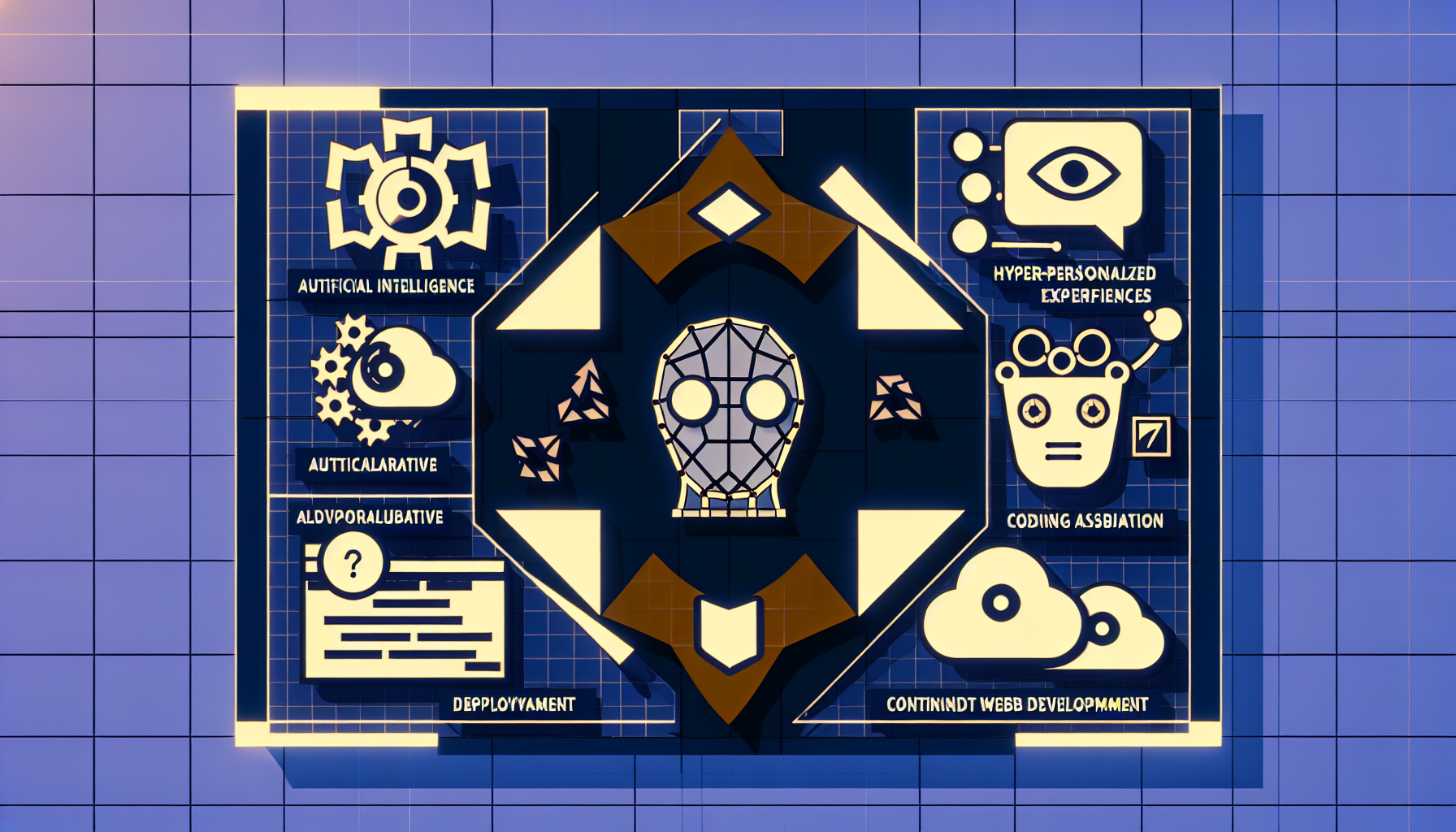
Artificial Intelligence (AI) is revolutionizing web development, enhancing both developer efficiency and user experiences. From adaptive designs to automated coding assistance, this article unveils how AI innovations reshape workflows and foster hyper-personalized interactions in digital platforms. Join us as we explore the transformative power of AI in crafting web development’s future.
AI in Web Development
The ever-evolving landscape of web development necessitates a deep understanding of user needs to foster engaging digital experiences. AI plays a pivotal role in revolutionizing personalized user experience (UX) by harnessing vast amounts of user data to build nuanced personas. These AI-driven insights enable developers to create interfaces and content tailored to individual user preferences, which enhances engagement and satisfaction.
AI interprets user interactions, preferences, and feedback through sophisticated algorithms, allowing it to curate content that truly resonates with users. For instance, Threads’ ‘Dear Algo’ exemplifies this approach by analyzing user engagement patterns to present highly personalized feeds. This method not only keeps users engaged but also perpetuates a cycle of interaction that refines and optimizes content over time.
Furthermore, the integration of AI in UX design facilitates dynamic adaptation of interfaces, ensuring they remain relevant to shifting user behaviors and contexts. By deploying AI to enhance personalization, developers are empowered to create rich, compelling web experiences that evolve alongside their users, thereby maximizing retention and driving user loyalty in an increasingly competitive digital environment.
Personalized UX
Understanding user needs is crucial for creating engaging digital experiences. This chapter delves into the concept of personalized user experience (UX) driven by AI. By harnessing vast amounts of user data – including behaviors, preferences, and interactions – AI interprets this information to build detailed personas that shape content and interface design. This data-driven approach facilitates highly relevant and tailored experiences that resonate with users on an individual level.
Notable implementations of personalized UX can be seen in platforms like Threads’ ‘Dear Algo’, which offers users personalized feeds that adapt based on their unique interactions. By analyzing user participation, ‘Dear Algo’ curates content that feels more relatable and engaging than generic feeds. This implementation demonstrates how AI can transform user engagement by presenting content that aligns with personal interests, ultimately increasing satisfaction and retention.
Furthermore, AI’s capability of learning from ongoing user interactions ensures that personalized experiences evolve continuously. As user preferences shift, the system adapts, providing fresh recommendations and interactions, thereby maintaining relevance in an ever-changing digital landscape. This highlights the transformative potential of AI in creating a dynamic and meaningful user experience.
Continuous Delivery
Continuous delivery (CD) is revolutionizing the landscape of software development, allowing teams to release updates rapidly while ensuring high quality and reliability. At its core, CD automates the deployment pipeline, minimizing manual interventions that often introduce errors. The integration of AI in these processes serves a dual purpose: enhancing the reliability of deployments and reducing risks.
AI-driven tools now enable developers to automate testing and monitoring. These intelligent systems analyze code changes, identifying potential issues early in the development cycle. For instance, AI can predict the impact of a new feature on existing functionalities, streamlining regression testing and ensuring that updates won’t inadvertently disrupt user experiences. Moreover, AI enhances deployment processes by facilitating smarter rollbacks; should an update fail, AI systems can quickly revert changes while providing insights into the cause of the failure.
This intelligent automation within CD not only accelerates release cycles but also allows developers to focus on innovation rather than repetitively troubleshooting. By adopting CD practices with AI at the helm, development teams can maintain continuous delivery of exceptional software, supporting a dynamic and competitive digital landscape.
CI/CD and Its Impact
Building on the foundation laid by continuous delivery, the integration of continuous integration (CI) and continuous delivery (CD)—together known as CI/CD—revolutionizes the way development and operations teams collaborate. CI/CD pipelines streamline workflows, enabling teams to automate the integration of code changes, resulting in heightened efficiency and reduced integration issues. The infusion of AI within CI/CD processes further enhances this synergy. AI algorithms can predict potential integration conflicts and surface code quality issues before they become persistent problems, facilitating an agile response to development challenges.
Employing tools such as Jenkins, GitLab CI, and CircleCI, developers can continuously build, test, and deploy their applications while AI-enhanced features help optimize these workflows. Best practices for CI/CD adoption include maintaining a single source of truth for code, employing automated tests to validate changes, and ensuring that deployment feedback is immediate and actionable. As developer teams adapt swiftly to changes, the incorporation of AI into CI/CD pipelines not only accelerates software delivery but also fosters a culture of collaboration. This refined workflow enables teams to focus on innovation and responsiveness, paving the way for intuitive, user-centric web experiences.
AI-Assisted Coding
This chapter explores the tools and methodologies surrounding AI-assisted coding. AI technologies offer developers a revolutionary approach to writing and maintaining code through predictive text, automated bug detection, and intelligent code synthesis. By leveraging machine learning algorithms, coding assistants can predict the next lines of code based on context, which helps accelerate the design process and reduces cognitive load on developers. Furthermore, AI-driven tools can autonomously identify bugs within existing codebases, providing timely suggestions and enabling swifter resolution of potential issues. This not only enhances productivity but also fosters a culture of continual improvement in written code.
The adoption of these technologies carries significant implications. While efficiency gains are substantial, challenges arise as reliance on AI-generated outputs can lead to concerns regarding oversight, creativity, and originality. Developers must maintain a balance, ensuring that human judgment remains central to the coding process. As a result, the skill sets required for future developers are evolving; proficiency in AI tools becomes as essential as coding expertise itself. Developers must learn to interpret AI suggestions critically and integrate these innovations with traditional practices, paving the way for a new paradigm in software development.
Ethics in AI Development
As AI becomes ingrained in the fabric of web development, addressing the ethical dimensions of its implementation is crucial. The burgeoning capabilities of AI in personalizing user experiences raise significant questions regarding fairness, accountability, and transparency. The algorithms that power these personalized experiences often reflect the biases present in their training data, which can lead to skewed or discriminatory outcomes. For instance, if a recommendation system is primarily trained on data from a specific demographic, it may inadvertently favor products or services that do not resonate with a broader audience.
To mitigate these risks, developers and organizations must prioritize ethical AI practices from the outset. This entails adopting frameworks that ensure rigorous bias testing and fostering diverse data sets to create more equitable algorithms. Moreover, maintaining accountability through clear documentation and user feedback mechanisms is essential for building trust within the user community. Transparency in how AI systems make decisions will empower users and help prevent the erosion of privacy in favor of personalization. As web development increasingly hinges on AI, fostering a culture of responsible innovation will prove fundamental in shaping an inclusive digital landscape, ultimately benefiting all users while steering clear of ethical pitfalls.
Conclusions
In conclusion, AI is not just a technological advancement but a transformative force in web development. By automating processes and enabling hyper-personalization, it allows developers to focus on creativity and quality. As we embrace these innovations, it is crucial to navigate the ethical challenges they present, ensuring responsible and equitable outcomes in our rapidly evolving digital landscape.