The Autonomous AI Agent Revolution: Reshaping Industries and the Future of Work
Autonomous AI agents are at the forefront of technological transformation, reshaping how industries operate. By deploying intelligent systems across various sectors, businesses are poised to enhance efficiency, drive innovation, and redefine the workforce. This article explores the influence of AI agents on diverse fields, the challenges they present, and the ethical considerations surrounding their deployment.
Understanding Autonomous AI Agents
Autonomous AI agents are fundamentally reshaping how industries operate by utilizing cutting-edge technological advancements. The rise of these intelligent entities is largely enabled by significant improvements in artificial intelligence, cloud computing, and big data analytics. Together, these technologies create an ecosystem that supports the deployment of AI agents capable of performing complex tasks seamlessly.
AI advancements, particularly in machine learning and natural language processing, empower agents to learn from large datasets and adapt to new patterns without human oversight. When combined with cloud computing, businesses can scale their AI capabilities rapidly while storing and accessing vast amounts of information efficiently. This synergy allows organizations to deploy AI agents that can analyze data in real-time, making informed decisions at unprecedented speeds.
Moreover, big data analytics provides the raw material necessary for these agents to operate effectively. For instance, in the customer service sector, chatbots leverage AI algorithms to understand and respond to inquiries, continually improving over time. Platforms such as Amazon Web Services (AWS) and Microsoft Azure offer AI tools that facilitate the creation and maintenance of these agents, showcasing their operational impact across various industries, from finance to healthcare, ultimately driving business transformation and enhancing productivity.
The Technological Drivers of AI Automation
The rise of autonomous AI agents can be attributed to several pivotal technological advancements that have redefined the landscape of business operations. At the core of this transformation lies **artificial intelligence**, which has seen significant improvements in machine learning algorithms, enabling enhanced predictive analytics and decision-making capabilities. Coupled with **natural language processing** advancements, these AI agents can interpret and respond to human language with remarkable accuracy.
**Cloud computing** is another essential pillar supporting AI automation, providing the scalable infrastructure necessary for processing vast amounts of data. This accessibility allows businesses to deploy AI solutions without substantial upfront investments in hardware, facilitating quicker innovation cycles and lower operational costs.
Moreover, the advent of **big data** analytics empowers AI agents to harness information from diverse sources, delivering actionable insights that were previously unattainable. Tools such as Salesforce Einstein and Google Cloud AI exemplify how these technologies converge, effectively automating tasks from customer segmentation to predictive maintenance across various sectors.
Together, these advancements foster a synergistic environment where autonomous AI can thrive, driving **business transformation** and steering organizations towards a more **digitally innovative** future, ultimately shaping the **workforce evolution** we witness today.
Industry Applications of Autonomous AI
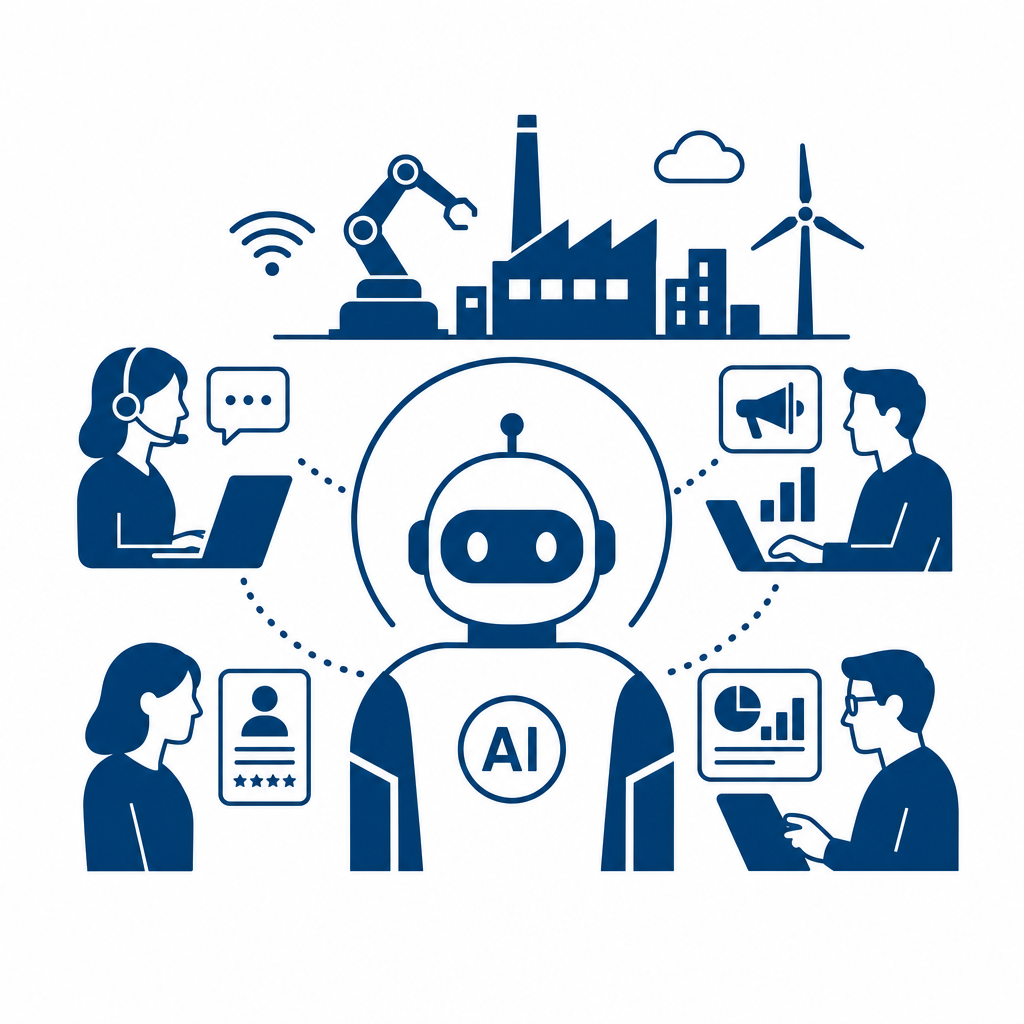
As industries evolve in the wake of technological advancements, autonomous AI agents are increasingly being embedded into various sectors, revolutionizing traditional operations. In customer service, companies like Ada utilize AI chatbots to handle inquiries, significantly reducing wait times and improving customer satisfaction by providing instant responses. Similarly, in marketing, platforms like Persado employ AI to create compelling messaging tailored to individual consumer preferences, optimizing engagement and conversion rates.
In HR, solutions such as Pymetrics leverage AI to match candidates’ skills with company culture, minimizing bias in recruitment processes and enhancing staff retention. When it comes to data analysis, tools like Tableau harness the power of AI to automate complex data visualizations, enabling businesses to derive actionable insights with minimal human intervention.
Specific case studies further illustrate these benefits. For instance, a global retailer that implemented AI-driven inventory management systems reported a 30% reduction in stock shortages, streamlining operations and maximizing sales opportunities. Overall, these implementations not only drive operational efficiencies but also enhance customer experiences, making autonomous AI agents pivotal for business transformation in an increasingly competitive landscape.
The Efficiency and Innovation Potential
As businesses increasingly adopt autonomous AI agents, the potential for enhanced efficiency and innovation becomes apparent. These intelligent entities optimize workflows by automating repetitive tasks, allowing human employees to concentrate on higher-level, strategic initiatives. For instance, AI agents can manage customer interactions, analyze market trends, or streamline recruitment processes, often executing tasks at a speed and accuracy far beyond human capabilities.
Key metrics underscore the significant return on investment from AI automation. According to recent studies, companies leveraging AI technologies can experience a cost reduction of up to 30% in operational expenses while enjoying a 10-20% increase in productivity. Furthermore, organizations have reported that AI has accelerated time-to-market for new products by up to 25%, a critical advantage in today’s fast-paced business environment.
The influence of autonomous AI extends beyond mere operational efficiency. It catalyzes innovation by providing data-driven insights that inform creative solutions and strategic decisions. With AI agents continually analyzing vast datasets, businesses can uncover trends and opportunities that human analysis might overlook, positioning them at the forefront of their industries amid the ongoing wave of digital innovation.
Ethical Considerations of AI Integration
As autonomous AI agents become integral to business processes, a host of ethical considerations arise that cannot be overlooked. **Data privacy** stands out as a primary concern. Companies utilizing AI must ensure that sensitive information is safeguarded against misuse. The collection and management of personal data necessitate robust policies to uphold consumer trust while adhering to regulations such as GDPR.
**Transparency** in AI decision-making processes is equally vital. Stakeholders must understand how algorithms reach conclusions to mitigate the perception of “black boxes,” where decisions appear arbitrary. This transparency fosters accountability and helps businesses build credibility.
Moreover, **algorithmic bias** poses significant risks. AI systems trained on historical data may inadvertently perpetuate or amplify existing biases. Industries must proactively analyze and audit their AI applications to recognize and rectify these biases, ensuring fair treatment for all users.
To navigate these challenges effectively, the establishment of **ethical guidelines and regulations** is paramount. Companies must engage in responsible AI development and deployment, harmonizing innovation with societal demands. Striking this balance will be critical as businesses move deeper into a digitally innovative landscape, ultimately shaping ethical standards for Industry 4.0.
The Future of Work and Human-AI Collaboration
As autonomous AI agents become embedded within various industries, the nature of work is undergoing a significant transformation. These advanced systems are not just tools; they are becoming collaborative partners in the workplace. For organizations to harness the full potential of these intelligent entities, a new dynamic of human-AI collaboration is essential.
To effectively integrate autonomous AI agents, businesses must invest in fostering an environment where employees feel empowered to work alongside these technologies. This involves not just upskilling the workforce but also redefining roles to complement AI capabilities. Employees will increasingly need to focus on tasks that require emotional intelligence, creativity, and strategic thinking—areas where human skills surpass AI.
Retraining initiatives should aim to bridge the skills gap, emphasizing proficiency in digital tools and data interpretation. Companies may also benefit from promoting a culture of continuous learning, encouraging staff to adapt to AI advancements as they evolve.
Moreover, as this collaboration develops, organizations should prioritize transparent communication about how AI agents function and their roles within the team. This transparency can serve to alleviate fears and enhance trust, thereby maximizing productivity and innovation in this new era of work.
Conclusions
The rise of autonomous AI agents heralds a significant shift in the landscape of business operations and workforce dynamics. As companies embrace these technologies, they must navigate ethical implications while striving for enhanced collaboration between humans and AI. The potential for transformation is immense, paving the way for a future enriched by efficiency and innovation.