The AI Creative Collision – Navigating Copyright, Compensation, and the Future of Content
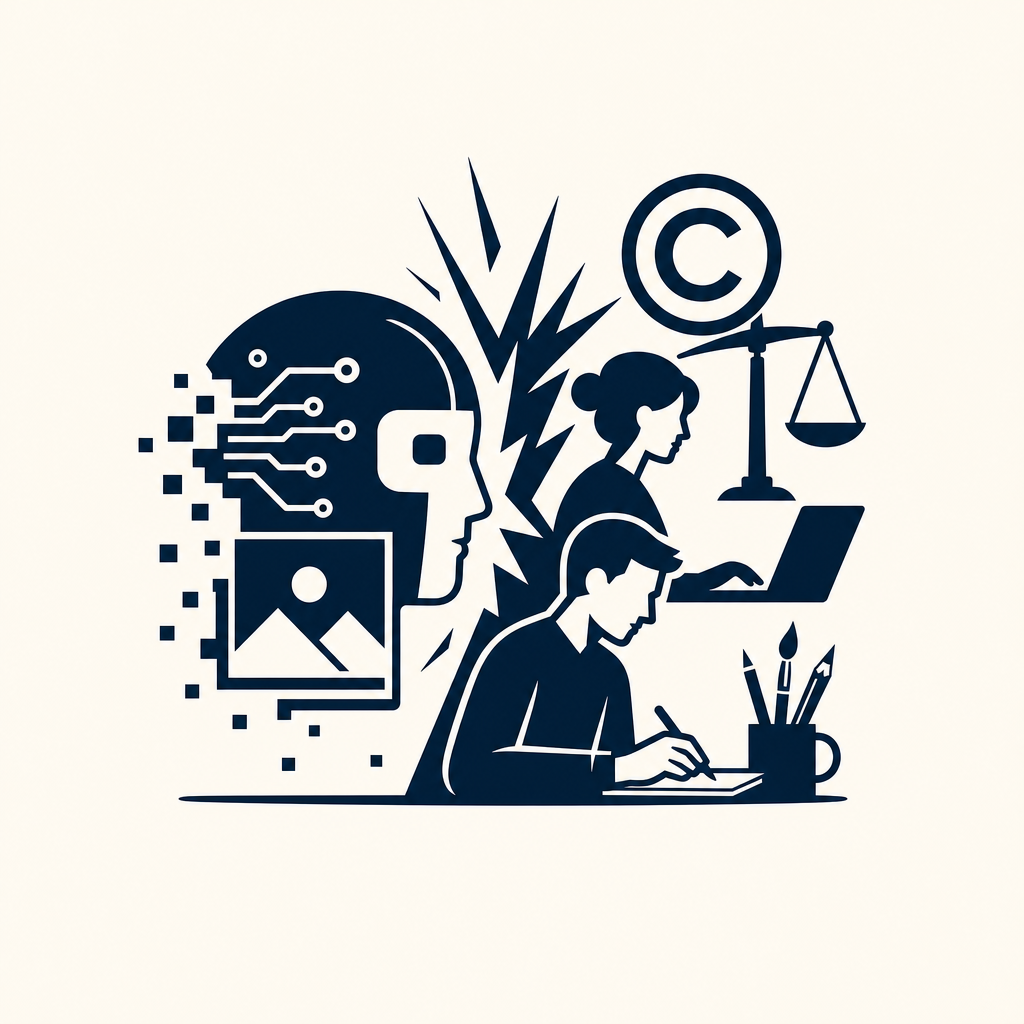
The infusion of artificial intelligence into creative processes is transforming industry standards, raising complex issues surrounding copyright, fair use, and intellectual property. As AI-generated content becomes more prevalent, understanding the pressing legal disputes and economic implications for creators is essential for navigating this new digital landscape.
Understanding AI in Creative Workflows
The integration of artificial intelligence into creative workflows is not only reshaping the methods artists, writers, and designers employ but also igniting complex legal questions surrounding ownership and authorship. As AI tools enhance the creative process—through applications like generative AI art and automated text creation—established laws of copyright struggle to keep pace with innovation. The technology behind generative AI, which utilizes algorithms and massive datasets to produce original compositions, is redefining what it means to be a creator. This blurs the lines of authorship, as works generated by AI lack a traditional human creator, raising profound questions about IP rights.
High-profile legal disputes underscore these tensions. Cases like The New York Times vs. OpenAI have highlighted the friction between media companies seeking to protect their content and AI developers striving to innovate without infringing on intellectual property rights. Current copyright laws primarily apply to human creators, failing to recognize the unique challenges posed by works that are at once collaborative and autonomous. As the industry navigates this evolving landscape, a reassessment of legal frameworks will be essential to ensure fair compensation for creators while fostering the potential of generative technologies.
The Rise of Legal Disputes Over AI-Generated Content
As the integration of AI into creative workflows accelerates, legal disputes surrounding AI-generated content have proliferated. The landmark case of The New York Times vs. OpenAI epitomizes the growing tension between traditional copyright laws and the novel challenges posed by generative AI. Current laws define copyright protection in terms of human authorship, a classification that may become increasingly outdated as AI systems begin producing distinct works.
This juxtaposition raises thorny questions regarding authorship and ownership. If an AI creates a piece of art or writing, who holds the copyright—the programmer, the user, or the AI itself? Existing jurisdictions struggle to navigate this uncharted territory, often applying traditional legal frameworks that do not adequately encapsulate the complexities of machine-generated creativity. High-profile legal battles serve as a crucible for re-evaluating the essence of creative ownership in an era where AI can mimic human-like creativity.
Moreover, the outcomes of these disputes will likely shape the economic landscape for creators. The more these legal frameworks adapt to incorporate AI, the more they may redefine the pathways to compensation for human artists, writers, and designers amid a rapidly evolving media environment.
Fair Use in the Age of AI
The emergence of AI technologies is challenging traditional notions of fair use, especially as they pertain to the training of generative models. Fair use has historically allowed creators to leverage existing works under certain conditions, but the scale and nature of AI’s training processes raise significant legal questions. The integration of large datasets contains substantial amounts of copyrighted content, prompting a reevaluation of how fair use is defined.
Recent legal interpretations, including cases stemming from AI’s reliance on pre-existing works, are beginning to reshape the landscape. Courts have to grapple with whether the transformative nature of AI-generated content qualifies as fair use or if it simply constitutes copying. The *Google Books* case, for instance, provided insights into transformative use, yet it remains to be seen how similar principles will apply to generative AIs that create new yet derivative outputs.
These disputes are not just legal; they inherently impact artists and companies. As the definitions of fair use evolve, creators face the challenge of protecting their intellectual property while navigating an increasingly automated and innovative environment. Striking a balance is essential, as the boundaries of creativity and ownership undergo a profound transformation.
Economic Impacts on Creative Industries
The economic landscape of creative industries is undergoing seismic shifts as AI technologies proliferate. Artists, writers, and designers are now grappling with evolving compensation models, igniting debates over the value of creative work. While generative AI offers new avenues for creativity, it simultaneously raises concerns about the devaluation of human-created art.
As businesses increasingly adopt AI for content production, the demand for traditional creative jobs risks diminishing. This shift alters not just the nature of creative roles but also the revenue streams available for human creators. Many artists are experimenting with hybrid models, integrating AI tools to enhance their work while navigating the complexities of compensation. Some are thus able to capitalize on AI-generated content, using it to generate supplemental income, but the overall market value of creative outputs may suffer as a result.
Furthermore, the competition between AI-generated and human-generated content complicates the dynamics of creativity. As businesses search for cost-effective solutions, a troubling trend emerges: a race to the bottom in pricing, ultimately undermining the financial viability of traditional artistic professions. In this uncertain landscape, redefining the economic appreciation of human creativity becomes paramount, necessitating innovative approaches to compensation that ensure fair recognition in an era dominated by AI’s capabilities.
Attribution and Recognition in AI-Driven Creation
Attribution in the realm of AI-driven creation raises pressing ethical questions about crediting contributions from both human creators and artificial intelligence. The increasing prevalence of generative AI in producing music, art, and literature blurs the distinction between human and machine-generated content, complicating the attribution landscape. Recognizing the input of AI in the creative process is crucial not only for transparency but also for maintaining the integrity of the creative community.
If artists, writers, and designers fail to receive due credit, it poses a risk of diminished recognition, potentially undermining their value in the marketplace. Conversely, automated systems may reap disproportionate benefits without acknowledging their human counterparts. Establishing fair credit systems is paramount; multi-tiered attribution models could designate credit categories that encompass both AI contributions and human creativity.
Furthermore, collaboration platforms could implement transparent guidelines that foster an environment of shared recognition. Developing norms for attribution amidst AI’s evolving role will not only help preserve the artistic integrity but also inspire a symbiotic relationship between human creators and technology in future creative endeavors.
Redefining Creativity in the AI Era
As we navigate the complexities of collaboration between humans and AI, the very essence of creativity is undergoing profound transformation. The rise of generative AI not only enhances creative workflows but also prompts a reevaluation of what it truly means to be creative. Traditionally, creativity was seen as an innate human capacity powered by intuition, emotion, and experience. In contrast, AI-generated content raises questions about the authenticity and originality of creation.
While AI can produce a staggering volume of work, its calculations stem from existing data and patterns, leading to products that may lack deep emotional resonance or a unique personal touch. This blend of human intuition and machine learning opens new avenues for artistic expression, blurring the lines between human-made art and algorithm-driven output. As a result, we may witness a shift towards collaborative creativity where human and AI contributions coexist.
Looking ahead, as technology continues to evolve, we may see creative processes become more hybridized, fostering novel artistic forms that merge human insight with machine efficiency. Discussions around the definition of creativity will likely center on collaboration rather than competition, posing questions not only about the creator but also the value and meaning of art in a world where intent and creation diverge. Future trends may prioritize ethical usage, ensuring that compensation models adapt to acknowledge both human and AI contributions, ultimately redefining how we perceive and reward creativity.
Conclusions
The intersection of AI and creativity presents both challenges and opportunities for established creative industries. By engaging with evolving legal frameworks and innovative compensation models, stakeholders can shape a future where both human creativity and AI technology coexist harmoniously, paving the way for new definitions of artistic expression.