The Unseen Watchers: Navigating AI Surveillance, Biometrics, and Public Trust
As AI surveillance and biometric data collection proliferate in public spaces, society is faced with critical questions about privacy, safety, and trust. This article examines the implications of these technologies, the ethical dilemmas they provoke, and the complex interplay between advancing technology and protecting individual rights.
The Rise of AI Surveillance
The proliferation of biometric data collection is reshaping how society interacts with technology, particularly in surveillance contexts. This evolution encompasses various types of biometric identifiers, including facial recognition, fingerprints, iris scans, and even gait analysis. Each method leverages sophisticated algorithms that process and analyze unique physical traits to authenticate identities or monitor behaviors.
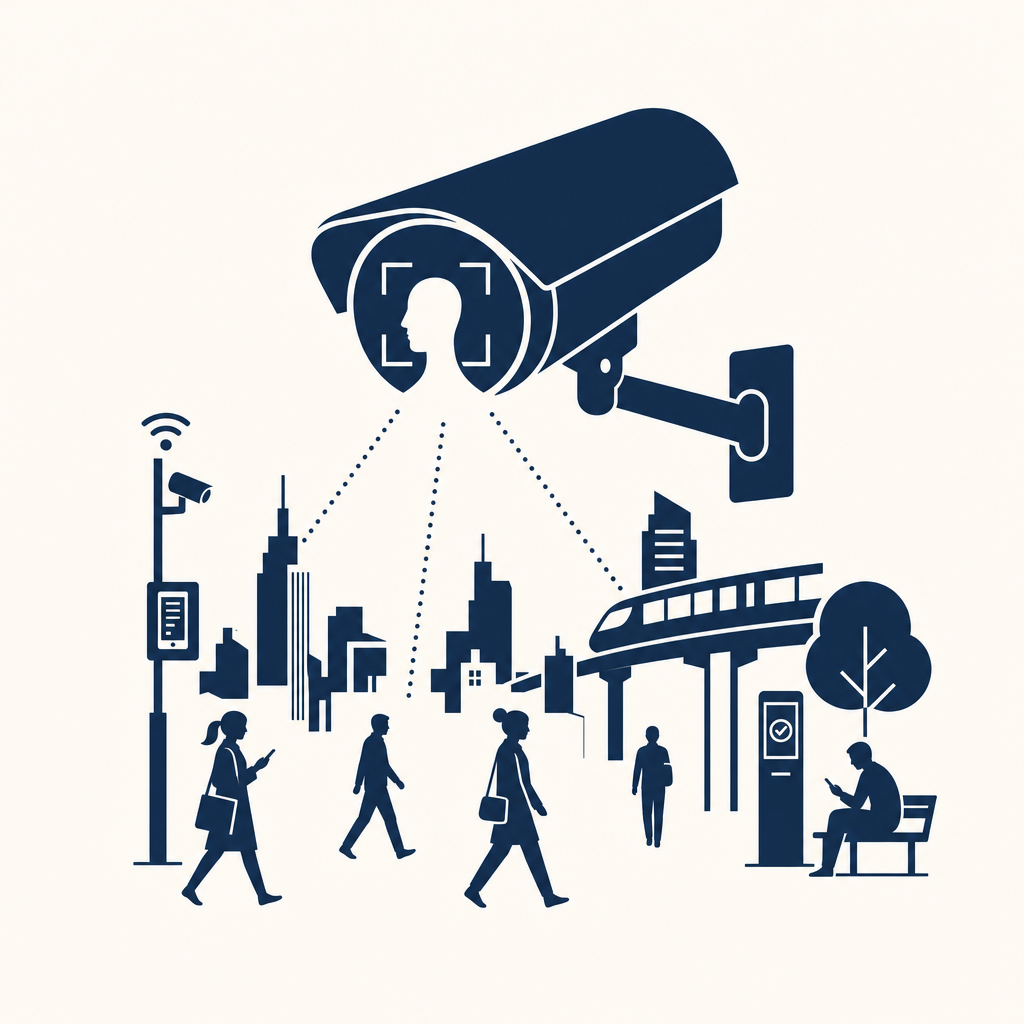
Facial recognition technology, for instance, has gained traction in public spaces and retail environments, using high-resolution cameras paired with AI-powered analytics to identify individuals based on their facial features. Laws enforcement agencies deploy these systems to enhance public safety, often culminating in ethical dilemmas concerning privacy and misuse. Similarly, fingerprint scanning has become commonplace in security protocols, from unlocking smartphones to access controls in corporate offices.
The rise of wearables and smart devices has also propelled the integration of biometric sensors, allowing continuous data collection that can lead to more personalized services but raises significant privacy concerns. High-profile cases, such as those related to airport security or urban surveillance in smart cities, underscore the urgent need for regulatory frameworks that protect individual rights while advancing technology’s capabilities. The challenge lies in finding the balance between security imperatives and ethical data management practices.
Biometric Data Collection: The New Norm
Biometric data collection has emerged as a cornerstone of contemporary surveillance practices, with various types of data being harvested to create digital profiles of individuals. Prominently, facial recognition technology has gained traction, utilizing sophisticated algorithms to analyze facial features and match them against databases. Besides facial recognition, methods such as fingerprint scanning and gait analysis are increasingly employed in both public and private sectors. These technologies, often embedded in security systems, mobile devices, and smart city infrastructures, send ripples through society regarding personal autonomy.
The implications of this collection are far-reaching. Many citizens unknowingly become part of expansive datasets, often without explicit consent. The collection of biometric data is driven by the dual motivations of enhancing public safety and streamlining commercial transactions, yet it raises troubling ethical concerns. High-profile cases, such as New York City’s deployment of facial recognition in law enforcement and the widespread roll-out of fingerprint scanners in airports, exemplify the creeping normalization of biometric surveillance.
As businesses and governments integrate these technologies, striking a balance between security and privacy becomes increasingly contentious, challenging the fabric of trust within communities and reorienting expectations of personal privacy in an evolving digital landscape.
Privacy Concerns in a Surveillance Society
The surge of AI surveillance technologies and biometric data collection has engendered significant privacy concerns within society. Public opinion is increasingly wary of being monitored continuously, raising fears about the potential misuse of data collected through facial recognition and other biometric systems. For instance, numerous reports have surfaced about law enforcement agencies leveraging facial recognition technology for mass surveillance without consent, leading to wrongful accusations and arrests. These instances illustrate the troubling trajectory of government overreach, where the line between security and personal liberty blurs.
Moreover, individuals are becoming acutely aware of the psychological effects of constant monitoring. The feeling of being watched can stifle personal expression and foster a climate of distrust within communities. People may self-censor thoughts and actions, modifying their behavior due to the fear of surveillance exposure.
Additionally, the ethical implications surrounding data usage present challenges for both companies and governments. Many organizations collect data without adequate user awareness, creating a troubling environment where privacy is a secondary consideration. The risks of these technologies extend beyond immediate surveillance, impacting individual rights and the fundamental structure of society itself.
Public Safety vs. Individual Rights
As AI surveillance technologies become more entrenched in society, the tension between public safety and individual rights intensifies. In many instances, governments and businesses frame the adoption of surveillance systems, such as facial recognition, as essential for enhancing safety. For example, in the aftermath of terrorist attacks, cities have hastily implemented extensive monitoring systems aimed at thwarting future threats. These justifications often overshadow concerns about privacy and ethical considerations, leading to blind acceptance of invasive technologies.
Case studies from various cities illustrate this dilemma. In one instance, a metropolitan area deployed facial recognition at public events to quickly identify potential threats, citing significant reductions in crime rates. However, studies revealed that these systems disproportionately misidentified individuals from marginalized communities, raising questions about equity and accountability. The ethical imperatives of protecting individual rights cannot be overlooked, even in the quest for security.
Furthermore, the normalization of surveillance can lead to a culture of distrust among citizens. As societies grapple with the implications of AI monitoring systems, it becomes clear that a balance must be found—one that safeguards public safety without sacrificing the civil liberties that underpin democratic values. Thus, the debate continues, shaped by the imperative to evaluate the consequences of giving precedence to security over fundamental human rights.
Technological Advancements Driving the Trend
The push for AI surveillance and biometric integration is largely driven by rapid technological innovations. **Advancements in algorithms**, particularly machine learning and deep learning, empower systems to accurately recognize patterns in vast datasets, enhancing facial recognition capabilities and enabling predictive analytics in surveillance. These improvements allow for real-time monitoring and the identification of individuals in crowded public spaces or sensitive installations, adding to perceived public safety.
In parallel, the development of sophisticated **hardware**— including high-resolution cameras and specialized sensors—facilitates more effective data capture. Integrated with these devices, **cloud computing** offers robust storage solutions, allowing unprecedented amounts of data to be stored and analyzed seamlessly. This capacity for big data not only amplifies the effectiveness of surveillance but also introduces complex **privacy concerns**.
As these technologies flourish, ethical dilemmas arise surrounding data usage, consent, and the potential for abuse. The convergence of biometric data collection and **smart city** infrastructures raises essential questions about individual autonomy, surveillance normalization, and the responsibility of those leveraging this technology. Balancing innovation with **data ethics** will become increasingly challenging as reliance on AI-driven surveillance expands across societal frameworks.
Regulatory Challenges and Future Directions
The current regulatory landscape governing AI surveillance and biometric data collection is a patchwork of existing laws, often inadequate in addressing the rapid advancements in technology. While some countries have enacted specific legislation targeting biometric data—such as the General Data Protection Regulation (GDPR) in Europe—these regulations frequently fall short of providing comprehensive protection. Key gaps exist in areas such as consent, data ownership, and the ethical implications of AI algorithms.
Policymakers face significant challenges in balancing the pace of innovation with the imperative to protect individual rights. The integration of AI technologies in public safety often leads to conflicts between societal safety and personal privacy. For example, the use of facial recognition technology can aid law enforcement but risks exacerbating biases and discriminatory practices.
In response, many advocate for a future regulatory framework that emphasizes transparency, accountability, and public engagement. Proposals include the establishment of independent oversight bodies to ensure ethical compliance and the development of standards for algorithmic fairness. As technology evolves, there is an urgent need for adaptable regulations that can keep pace, ensuring that innovation does not come at the expense of public trust and individual rights.
Conclusions
In a rapidly evolving landscape dominated by AI surveillance and biometric data, striking a balance between public safety and personal privacy is essential. Reflecting on the ethical considerations, social implications, and regulatory challenges discussed, it becomes clear that ongoing dialogue and legislation will shape how society navigates these pressing issues.