The AI-Powered Organization Reshaping Roles Leadership and the Future of Work
The integration of artificial intelligence (AI) into the workplace is revolutionizing organizational structures and roles. This article examines the profound changes AI is fostering, from leadership dynamics to the evolution of careers. As AI transitions from a supportive tool to a decision-making entity, businesses must rethink their strategies to harness AI’s potential effectively.
Understanding AI in the Workplace
As AI reshapes the workplace, organizations are rethinking their strategies and structures to meet the demands of the evolving landscape. The future of work is characterized by a significant shift towards remote and flexible arrangements, which has been accelerated by technological advances and a changing workforce. The integration of AI technologies facilitates agile practices, enabling teams to adapt swiftly to changing market conditions while fostering a culture of collaboration and innovation.
These transformations necessitate adaptive business models that prioritize responsiveness and resilience. Organizations are increasingly leveraging AI systems to enhance communication and streamline project management, leading to an environment where human-AI collaboration becomes essential. This synergy not only boosts productivity but also allows human employees to focus on higher-level strategic thinking and creativity.
Leadership models are also evolving. Agile leaders who can navigate the complexities introduced by AI will be crucial in guiding organizations through this transition. They must foster a culture that embraces change, encourages continuous learning, and instills ethical governance to address the emerging challenges of AI deployment. Emphasizing a shared vision between human and AI capabilities prepares organizations to thrive in this dynamic future, ensuring sustained business growth and effective talent management.
The Future of Work and Organizational Transformation
As the future of work unfolds, organizations are undergoing profound transformations, reshaping their structures and strategies in response to the rapid advancements in AI technology. Remote work has become more than just a temporary solution; it is now a permanent feature of many organizations, driving a need for agile practices that foster collaboration and innovation. By embracing flexible work arrangements, companies can harness diverse talent pools from across the globe while responding nimbly to market shifts.
Adaptive business models are emerging, prioritizing iterative processes that integrate human-AI collaboration. AI agents, equipped with advanced capabilities, now work alongside employees, enhancing creativity and decision-making rather than merely automating tasks. This shift requires employees to develop new skill sets focused on strategic thinking, emotional intelligence, and collaborative problem-solving.
Moreover, organizations must rethink career development paths to cultivate a workforce prepared for this new landscape. Lifelong learning initiatives and cross-functional training programs are essential to empower employees in navigating dynamic roles. In this environment of continuous change, the ability to adapt, innovate, and collaborate becomes paramount for sustained business growth. Embracing these changes will not only enhance operational efficiency but also redefine organizational culture, fostering a sense of shared purpose and collective achievement.
New Leadership Paradigms in AI-Driven Environments
As organizations increasingly integrate AI into their frameworks, the role of leadership must evolve to effectively leverage these intelligent systems. Enter the notion of the Chief AI Officer (CAIO), a pivotal figure tasked with not only overseeing AI initiatives but also ensuring that these technologies are implemented ethically and responsibly. Ethical AI leadership is paramount, as leaders must navigate complex dilemmas regarding bias, data privacy, and accountability in decision-making processes influenced by AI.
Leadership strategies must pivot towards fostering innovation and collaboration within teams augmented by AI. This involves shifting from traditional hierarchical structures to more agile, cross-functional team dynamics where human-AI partnerships flourish. Leaders will need to cultivate a culture of trust and transparency, encouraging employees to embrace AI as a complementary force rather than a competing entity.
To effectively guide their organizations, leaders must focus on continuous learning and skill development, empowering employees with the knowledge to work alongside AI systems. This proactive approach not only enhances business growth but also positions organizations at the forefront of an ever-evolving workforce landscape. In such environments, leadership itself becomes a dynamic entity, adapting to the changing roles and responsibilities dictated by sophisticated AI agents.
Human-AI Collaboration: Redefining Job Roles
As AI increasingly integrates into the workplace, traditional job roles are undergoing a significant transformation. The paradigm of human-AI collaboration emerges, emphasizing a synergistic relationship where AI acts as an augmentative force rather than a replacement. This collaboration allows human employees to engage in more complex decision-making, creativity, and emotional intelligence, which are areas where AI excels less effectively.
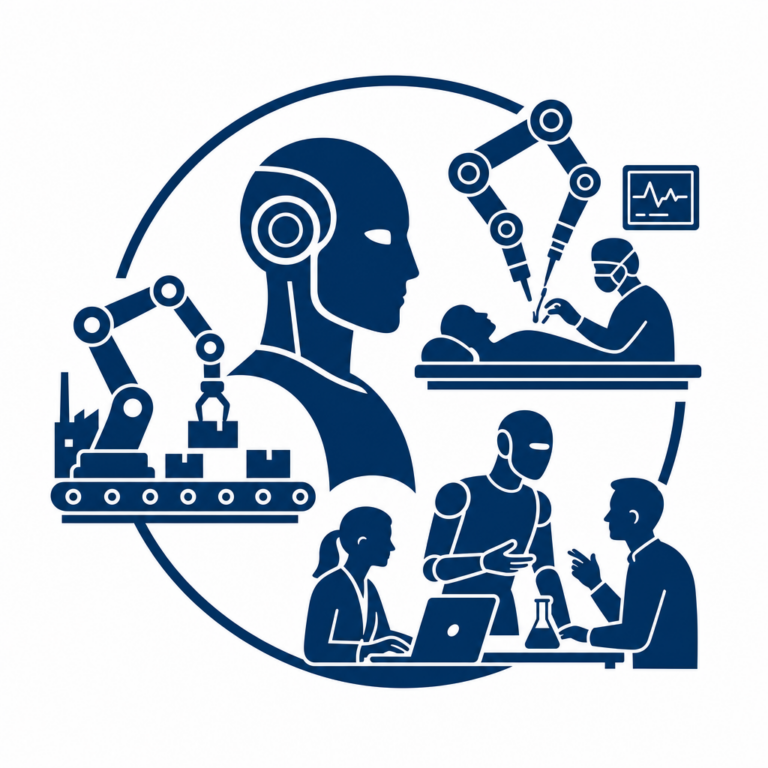
Key industries like healthcare, manufacturing, and customer service witness the most extensive changes. In healthcare, AI assists in diagnostics and administrative tasks, enabling professionals to focus on patient care. In manufacturing, AI-driven automation enhances efficiency, freeing workers to manage processes and drive innovation. Customer service benefits from AI chatbots handling initial inquiries, allowing human agents to tackle advanced issues and provide personalized service.
To thrive in this evolving landscape, employees must develop a blend of technical skills and soft skills. Proficiency in data analysis, machine learning principles, and AI tools is essential, alongside critical thinking, adaptability, and collaborative communication. Such skills not only enhance individual performance but also strengthen organizational resilience, positioning businesses for sustainable growth in an AI-enhanced future.
Navigating Ethical Considerations in AI Integration
As AI becomes increasingly integrated into the workplace, ethical considerations inevitably arise. The deployment of AI systems can inadvertently propagate algorithmic biases, affecting decision-making processes across diverse sectors. Organizations must confront accountability issues, particularly regarding who is responsible when AI systems produce unfair outcomes. These challenges necessitate the implementation of robust frameworks to ensure ethical governance.
Privacy concerns are paramount in this AI-driven environment. The collection and analysis of vast amounts of data raise significant ethical questions about user consent and data security. Businesses need to prioritize transparency in their AI operations, offering clarity on how data is used and decisions are made. Establishing guidelines that incorporate fairness, accountability, and transparency in automated processes can help build trust among stakeholders.
Adopting best practices in AI ethics is essential for navigating this complex landscape. This might include regular audits of AI systems to identify and rectify biases, and engaging in dialogue with employees and customers about ethical AI use. By fostering a culture of ethical awareness, organizations not only safeguard their reputation but also enhance their ability to thrive in an evolving marketplace increasingly influenced by AI technologies.
Strategies for Business Growth in an AI Era
To leverage AI for growth, businesses must adopt a multi-faceted approach that prioritizes digital transformation, continuous learning, and innovation. As organizations embrace AI, they need to redefine their operational frameworks to ensure that human-AI collaboration flourishes. This involves integrating AI agents into strategic roles that enhance efficiency and decision-making capabilities, thereby reshaping traditional workflows.
Investing in ongoing training programs is vital for employees to stay relevant and competitive in an AI-driven landscape. Organizations should foster a culture of continuous learning, encouraging employees to acquire new skills that complement AI technologies. This aligns talent development with the evolving needs of the workforce, facilitating smoother transitions as job roles shift.
Furthermore, businesses should innovate not just in technology but also in organizational structures. This means empowering cross-functional teams that harness diverse perspectives, driving creative solutions that address market demands effectively.
To remain resilient, companies must adopt agile methodologies that allow them to pivot quickly in response to changes in the marketplace. By embracing these strategies, organizations can position themselves for sustained growth while ensuring that their operational models remain robust and adaptable in the face of AI advancements.
Conclusions
The rise of AI in organizations marks a pivotal shift in how work is approached and executed. By redefining leadership, enhancing collaboration, and reshaping career development, businesses can create a future where humans and AI work synergistically. Embracing this change offers organizations the opportunity for sustainable growth and ethical governance in an era driven by technology.