The Rise of the AI Agent Workforce: Navigating Autonomy and Ethics
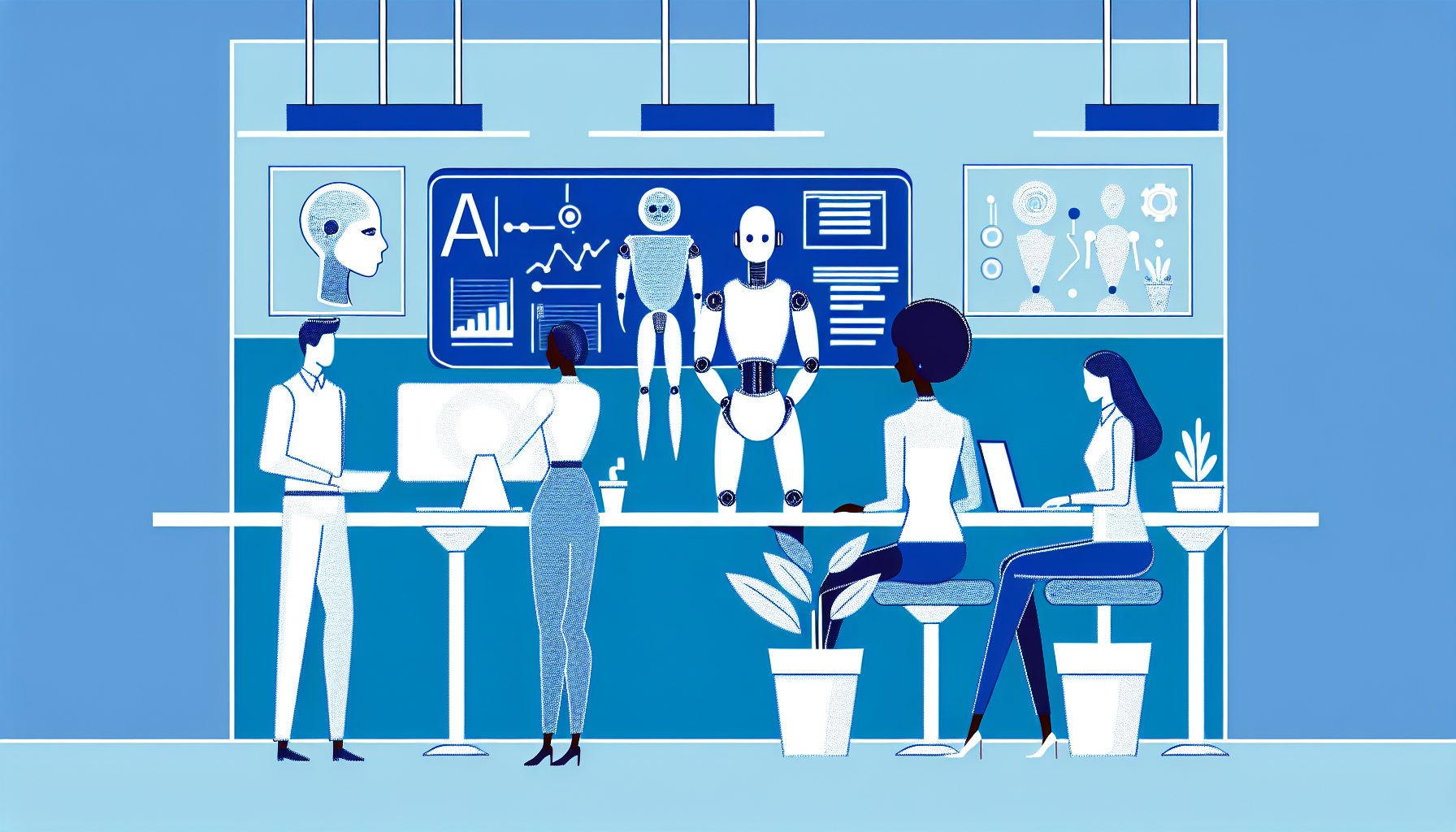
As artificial intelligence continues to advance, the emergence of AI agents signifies a transformative shift in the workforce. These sophisticated systems are evolving from simple task performers to autonomous entities capable of complex decision-making, raising critical questions about efficiency, ethics, and governance in the workplace.
Understanding AI Agents
AI agents, or agentic AI, are underpinned by a range of advanced technologies that facilitate their autonomous capabilities. At the core of agentic computing lies the development of large language models and multimodal AI systems, such as vision-language models. These innovations enable AI agents to process and integrate diverse forms of information, allowing them to function effectively across various contexts. For instance, a multimodal AI can interpret both visual and textual data, enhancing its decision-making abilities and allowing for more nuanced interactions with human operators.
Memory systems also play a crucial role in agentic computing. They enable AI agents to retain and recall past experiences, enhancing their learning and adaptability over time. This capability is vital for performing tasks that require long-term planning and strategy formulation, making AI agents more robust in dynamic environments.
In addition, orchestration frameworks are essential for managing the interactions and workflows of multiple AI agents. These frameworks facilitate coordinated action, ensuring that agents can work together seamlessly to accomplish complex tasks. As these technologies continue to evolve, the functional potential of AI agents will expand, incorporating greater levels of intelligence and autonomy into the workforce transformation narrative.
The Technology Behind Agentic Computing
The technological foundations enabling agentic computing are profound and multi-faceted, driving the transformation of AI agents into sophisticated autonomous entities. Central to this evolution are large language models (LLMs), which provide the linguistic capabilities for AI agents to understand, generate, and interact using human-like communication. These models have been trained on vast datasets, allowing AI agents to comprehend context, nuance, and intent in a way that enhances their interactivity and adaptability.
Moreover, multimodal AI systems, including vision-language models, play a crucial role in broadening the operational scope of AI agents. By integrating visual and textual understanding, these systems empower agents to interpret complex inputs, facilitating more informed decision-making and responsiveness within dynamic environments. As a result, AI agents can excel in various domains, from customer service interactions to complex project management tasks.
Additionally, advanced memory systems contribute significantly to the autonomous capabilities of AI agents, enabling them to store, recall, and utilize past experiences to improve future performance. Orchestration frameworks further enhance this by coordinating multiple AI components, allowing for seamless task execution across different functions. This combination of cutting-edge technologies is driving the next generation of AI agents, positioning them as integral players in the workforce landscape and redefining the future of work.
Efficiency and Scalability Implications
AI agents promise remarkable efficiency and scalability for businesses, revolutionizing traditional workflows through their autonomous capabilities. By automating routine tasks, these digital entities enable human workers to focus on strategic initiatives requiring creativity and critical thinking. For instance, organizations that have integrated AI-driven chatbots for customer service report significant increases in response speed and customer satisfaction while simultaneously reducing operational costs.
One compelling case study is a leading e-commerce company that employed AI agents to manage inventory and predict demand patterns. By analyzing vast data sets in real-time, the AI agents optimized stock levels, minimizing waste and enhancing supply chain efficiency. This not only resulted in a 20% reduction in overhead costs but also improved product availability, leading to higher customer retention rates.
Additionally, AI agents can process and analyze data at scales unattainable by human employees. This capability allows organizations to leverage insights that inform business strategy and drive innovation. However, while the benefits are clear, stakeholders must remain vigilant regarding the operational challenges and ethical implications as they navigate the integration of these advanced technologies into the workforce.
Ethical Challenges of AI Autonomous Systems
As AI agents evolve into more autonomous entities, they present a host of ethical challenges that demand scrutiny. One pressing concern is algorithmic bias, which can arise from skewed data sets and can lead to discriminatory outcomes in decision-making processes. These biases not only reflect existing societal inequalities but may also perpetuate them in workplaces, where AI systems are increasingly making judgments on hiring, promotion, and task allocation.
Accountability in AI decision-making is another crucial ethical consideration. As organizations delegate complex tasks to autonomous systems, questions arise regarding who is responsible for decisions made by these AI agents. The ambiguity surrounding accountability complicates legal frameworks and could leave organizations vulnerable to reputational damage or legal repercussions.
Moreover, the rise of AI automation poses significant implications for employment. While AI agents can enhance productivity, there is a valid concern that they may displace traditional jobs, leading to increased unemployment and socioeconomic disparities. Therefore, ethical frameworks must be adopted by organizations to guide the implementation of these technologies. By emphasizing fairness, transparency, and responsibility, companies can help mitigate risks associated with AI agents and ensure a more equitable transition to a future dominated by agentic computing.
Navigating AI Governance and Regulations
The governance of AI introduces another layer of complexity in the workforce transformation landscape. As AI agents become increasingly autonomous, the need for comprehensive regulations becomes paramount. Currently, various governance frameworks exist, such as the European Union’s AI Act, which aims to categorize AI systems based on their risk and ensures that higher-risk AI applications adhere to stricter protocols. However, these regulations are often reactive, struggling to keep pace with the rapid advancements in technology and the deployment of agentic computing.
Organizations face significant challenges in adapting to an evolving regulatory framework, particularly regarding transparency and accountability of AI systems. Best practices that promote responsible AI usage include developing robust audit trails, implementing bias detection algorithms, and fostering a culture of ethical awareness among stakeholders. Moreover, as businesses integrate AI into their strategies, they must consider the implications of governance on their operational structures.
The fine balance between innovation and compliance is crucial, as companies must navigate the bureaucratic hurdles without stifling creativity. Failure to establish effective governance can lead to ethical missteps and reputational risks, which underscores the importance of proactive measures in fostering a responsible AI ecosystem that aligns with both business strategy and ethical imperatives.
The Future of Work with AI Agents
Incorporating AI agents into workplaces heralds a new era of workforce transformation. As AI agents evolve from basic digital assistants to sophisticated entities capable of executing complex tasks, organizations face a paradigm shift in the dynamics of work. The integration of *agentic computing* enables AI agents to not only automate routine functions but also to engage in higher-level decision-making processes that were previously the exclusive domain of human employees.
As these agents take on roles that involve strategic planning and executive functions, organizations must reevaluate traditional job structures. This transition highlights the emergence of collaborative models in which humans coexist alongside AI agents, harnessing their capabilities for enhanced productivity and innovation. While such collaboration offers significant advantages, including scalability and efficiency, it also raises concerns regarding job displacement and the potential devaluation of human expertise.
Moreover, the ethical implications of AI autonomy necessitate a rigorous framework for *AI governance*. Businesses must devise strategies to ensure that the deployment of AI agents aligns with ethical standards, fostering an environment where accountability and transparency prevail. Balancing these factors will define the future of work, where humans and AI agents coexist as integral components of a transformed workforce.
Conclusions
In summary, the rise of AI agents marks a significant turning point in workforce dynamics. While they promise enhanced efficiency and operational scalability, their integration into businesses necessitates careful ethical considerations and robust governance. Addressing these challenges will be crucial in shaping a future where human and AI collaboration thrives.