The Rise of Autonomous AI: Navigating a Future of AI Employees, Chefs, and Scammers
As we advance into an era dominated by technology, autonomous AI is revolutionizing work and life. From AI agents optimizing business functions to autonomous chefs redefining culinary arts, the potential of AI is enormous. However, this rapid progress raises critical ethical questions and concerns about AI scams that we must navigate responsibly.
Understanding Autonomous AI
As autonomous AI continues to permeate various industries, its role as an intelligent agent — capable of executing tasks independently — is becoming increasingly evident. In sectors such as finance, healthcare, and customer service, AI agents are automating routine processes, enhancing accuracy, and delivering timely insights that aid decision-making. For instance, in the financial sector, AI algorithms analyze vast datasets to identify trends and predict stock movements, allowing traders to make informed choices at unprecedented speeds.
In healthcare, AI agents assist in diagnosing conditions by analyzing patient data and suggesting potential treatment plans, greatly reducing human error and improving patient outcomes. Similarly, in customer service, chatbots powered by autonomous AI handle inquiries 24/7, providing immediate responses and freeing human agents to focus on complex, nuanced problems that require emotional intelligence and creativity.
These AI systems not only improve efficiency but also change the nature of teamwork. Human workers are encouraged to collaborate with AI, blending emotional intelligence with computational analysis, which allows for a more holistic approach to problem-solving. As we observe these intelligent agents in action, it becomes clear that the future of work lies in forging effective partnerships between humans and AI.
AI Agents in Action
As autonomous AI continues to evolve, its application in modern industries reflects a transformative shift in operational capabilities. AI agents are now integral to sectors such as finance, healthcare, and customer service, streamlining processes and enhancing productivity. In finance, AI agents analyze vast datasets in real-time, enabling swift decision-making and risk assessment. A prominent example is Aladdin by BlackRock, which leverages AI to manage portfolios, optimize investments, and predict market trends, reducing the workload of financial analysts.
In healthcare, AI agents assist in diagnosing diseases, managing patient records, and even coordinating care schedules. The Case Study of IBM Watson illustrates this potential. Watson’s ability to analyze medical literature and suggest treatment options has revolutionized oncological therapy, allowing oncologists to make informed decisions with greater efficiency.
In customer service, AI chatbots provide immediate support, resolving customer inquiries with remarkable accuracy. A study of companies utilizing AI-powered chatbots revealed a significant reduction in response times and an increase in customer satisfaction. Nevertheless, the integration of AI agents is not without challenges. Their collaboration with human teams necessitates redefining roles and cultivating a synergistic environment, as workers adapt to share their responsibilities with intelligent systems while maintaining the essential human touch.
The Transformation of Culinary Arts
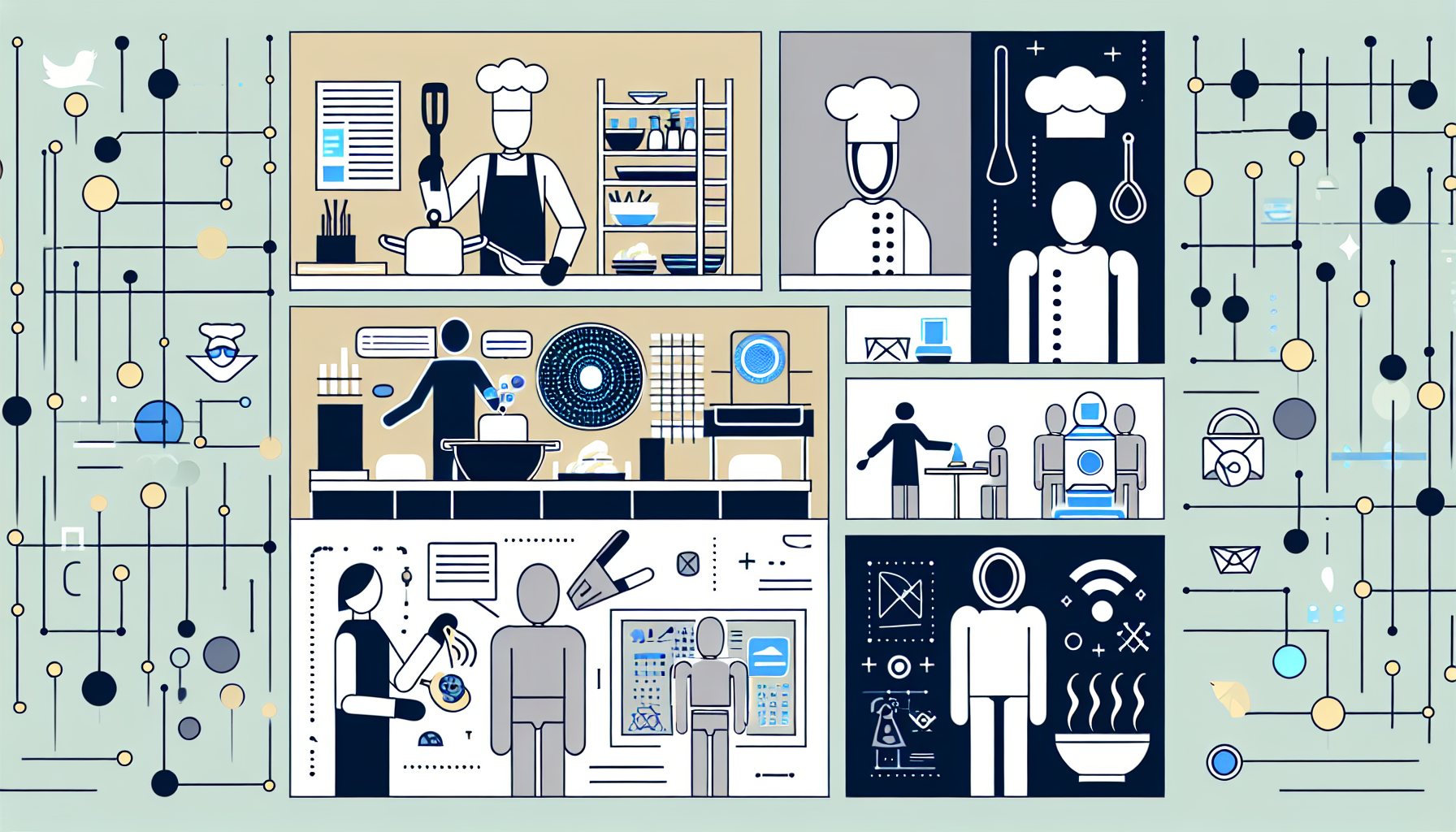
The advent of autonomous AI has fundamentally transformed culinary arts, ushering in an era of unprecedented innovation in both food preparation and dining experiences. AI chefs, leveraging advanced machine learning and robotics, are redefining the way we approach cooking. These intelligent systems can analyze vast databases of recipes and dietary preferences, allowing them to create bespoke culinary experiences tailored to individual tastes. By utilizing sensors and adaptive cooking techniques, AI can monitor cooking processes in real-time, ensuring optimal outcomes that might surpass the capabilities of human chefs.
Smart kitchen technologies, from autonomous sous-vide machines to robotic arms that can chop, sauté, and plate dishes, have revolutionized food preparation efficiency. Restaurants can minimize human error and enhance consistency, delivering high-quality meals at scale. Despite these innovations, the rise of AI in culinary environments also raises cultural implications. As AI chefs blend into our kitchens, questions about authenticity and the essence of traditional cooking begin to emerge. The social dynamics of dining—once deeply human interactions—may evolve as AI takes center stage in the kitchen. Balancing technology with culinary heritage is essential as we navigate this new frontier in gastronomic delight.
Ethical Considerations of Autonomous AI
The rise of autonomous AI presents profound ethical dilemmas that must be addressed as these technologies become integrated into various sectors. One significant concern is algorithmic bias, which can perpetuate and even exacerbate existing social inequalities if AI systems are trained on unrepresentative data. This bias can lead to discriminatory practices in hiring, lending, and law enforcement, necessitating stringent oversight to ensure fairness and equity.
Accountability in decision-making is another critical ethical issue. As AI systems operate independently, determining who is responsible for their actions becomes increasingly complex. This ambiguity raises questions about liability, especially in scenarios where autonomous agents make consequential decisions that impact human lives.
Moreover, the potential for job displacement due to AI automation cannot be overlooked. As autonomous agents take over tasks traditionally performed by humans, the workforce faces the challenge of adapting to a rapidly changing job landscape. Strategic measures, including reskilling and upskilling initiatives, are essential to mitigate these effects.
To navigate these challenges, robust ethical guidelines are imperative. Collaboration between stakeholders—governments, technologists, and the public—will help shape policies that ensure AI technologies enhance human capabilities while upholding societal values.
Navigating the Landscape of AI Scams
The rise of autonomous AI has not only revolutionized various sectors but also given rise to a new wave of scams and fraud. Malicious actors are increasingly leveraging AI technologies to craft sophisticated schemes that deceive individuals and organizations alike. Using algorithms capable of generating realistic text, voice, and even video, fraudsters can mimic trusted entities with alarming accuracy, escalating the risk of identity theft and financial loss.
Common methods employed in AI scams include deepfake technology, where synthetic media impersonates credible figures, and phishing attacks enhanced by natural language processing to create convincing emails. These automated strategies can scale rapidly, making it immensely challenging for law enforcement to keep pace with the virtual avalanche of fraudulent activity. Tactics that were once the domain of human scammers are now executed with enhanced efficiency through automation, complicating the identification of perpetrators.
Preventative measures must evolve in tandem with these developments. Education programs that inform users about recognizing AI-powered scams, alongside advanced detection tools utilizing machine learning, are critical. Establishing robust reporting systems and enhancing collaboration between technology firms and law enforcement can create a formidable defense against this dark side of autonomous AI. As AI continues to infiltrate everyday life, addressing these risks becomes a necessity for ensuring safety and security in a rapidly evolving landscape.
Future Visions: The Evolving Role of AI
As we peer into the future landscape shaped by autonomous AI, the potential for transformation across various sectors becomes strikingly evident. **Emerging trends** indicate an increasing integration of AI agents in the workplace, ushering in new job roles that harmonize human creativity with AI efficiency. Positions such as AI ethics compliance officers, human-AI collaboration specialists, and AI-enhanced customer experience designers are likely to emerge, emphasizing the importance of adaptability in both workforce strategies and educational frameworks.
Moreover, the relationship between humans and AI is poised to evolve, requiring innovative approaches to collaboration. Traditional hierarchies may dissipate, giving way to co-creational models where humans and AI work in unison, each contributing unique strengths. For instance, while AI excels in data analysis and routine tasks, human input in decision-making, emotional intelligence, and ethical considerations remains irreplaceable.
To navigate this changing landscape, continuous adaptation in education will be paramount. Institutions must emphasize not only technological proficiency but also critical thinking and ethical decision-making, preparing future generations for a world where **AI automation** becomes ubiquitous. A robust educational framework will ensure that society leverages the full potential of AI while fostering a commitment to ethical standards, ultimately creating a future where humans and machines coexist and thrive together.
Conclusions
The rise of autonomous AI presents both exceptional opportunities and daunting challenges. As AI becomes integral to our workforce and daily lives, it is crucial to adopt ethical frameworks and implement security measures to mitigate risks. Fostering positive human-AI collaboration can ensure a prosperous future shaped by technology.