
The Ethical Minefield of AI Deployment
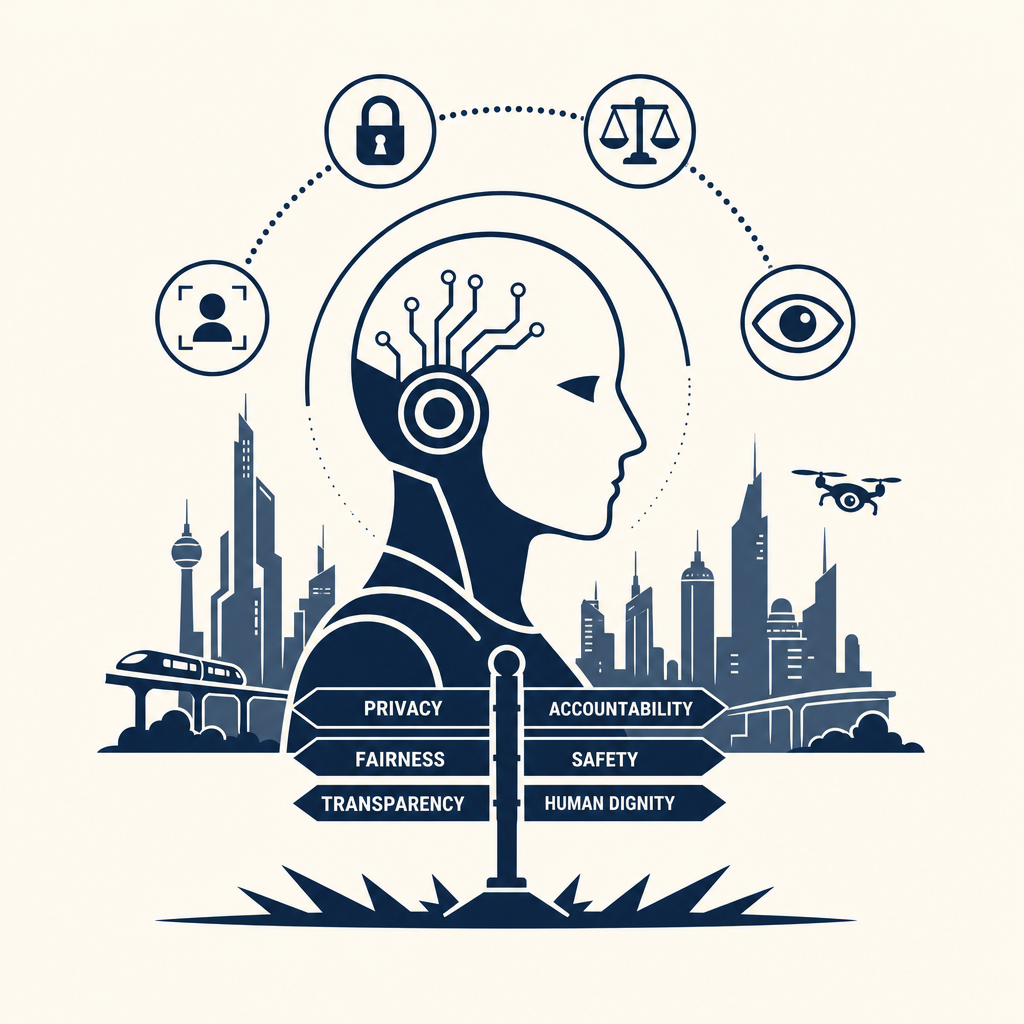
The deployment of artificial intelligence (AI) across various sectors raises significant ethical questions about privacy, bias, and societal impacts. As AI technologies continue to evolve, this article delves into the complexities surrounding surveillance practices, algorithmic fairness, and the pressing need for effective governance, emphasizing the importance of establishing ethical guidelines in advancing AI responsibly.
Understanding AI Ethics
AI ethics encompasses a set of moral principles guiding the development and application of artificial intelligence. At its core, AI ethics seeks to address the complex relationship between AI systems and human values, emphasizing fairness, transparency, accountability, and the implications of algorithmically-driven decisions. As AI technologies mature and seep into vital sectors such as healthcare, finance, and governance, the ethical stakes grow.
Fairness pertains to the equitable treatment of all individuals, ensuring that AI applications do not perpetuate or exacerbate existing inequalities. Transparency requires algorithms to be understandable and accessible, allowing stakeholders to grasp how decisions are made. Accountability demands that entities deploying AI take responsibility for the outcomes of their systems, fostering a culture of reliability and trust.
The moral implications of AI decisions, particularly in contexts where automated systems may affect people’s lives, necessitate rigorous scrutiny. As these technologies advance, the potential for unanticipated consequences increases, making a robust ethical framework essential. Understanding these foundational principles is crucial for navigating the ethical landscape that surrounds the deployment of AI, informing the discussions that follow on surveillance, data privacy, and governance in this complex arena.
The Impact of AI Surveillance
AI surveillance technologies are increasingly shaping both public and private sectors, providing significant benefits such as enhanced security measures in areas like law enforcement, crowd management, and corporate settings. Surveillance systems powered by AI can analyze vast amounts of data in real-time, enabling proactive threat detection and contributing to public safety. For instance, cities utilize AI-driven facial recognition for identifying suspects, while businesses deploy monitoring tools to safeguard their premises. However, these advancements carry substantial risks, primarily concerning invasive monitoring practices that can infringe on individual freedoms.
Societal perceptions of surveillance are deeply polarized. While some individuals recognize the potential for increased security, others express grave concerns regarding consent, especially when systems operate without clear transparency. The ethical dilemmas surrounding AI surveillance invoke vital questions about privacy and autonomy. Who owns the data collected through surveillance? Are individuals even aware they are being monitored? The absence of robust regulatory frameworks exacerbates these issues, leading to algorithmic biases that can unfairly target marginalized communities. As the deployment of these technologies expands, a responsible approach necessitates that ethical considerations guide their implementation to ensure the preservation of digital rights and individual liberties amidst the growing landscape of surveillance.
Navigating Data Privacy Concerns
As AI technologies become deeply embedded in various aspects of daily life and public services, the concern over data privacy intensifies. The immense data collection inherent in AI systems raises significant issues regarding individual rights and privacy. These systems often rely on vast amounts of personal data, which can lead to unintended consequences if not managed properly.
Regulations like the General Data Protection Regulation (GDPR) have emerged as essential frameworks for safeguarding personal data in AI deployments. GDPR mandates transparency in data usage, granting individuals the right to access, rectify, and erase their data. However, compliance poses challenges, particularly for organizations racing to innovate while adhering to stringent privacy norms. Many are struggling to understand how to implement these regulations effectively without stifling technological advancement.
In this interconnected world, where data flows seamlessly across borders, maintaining privacy becomes increasingly complex. The potential for misuse of personal information for surveillance, targeted advertising, or even discrimination further emphasizes the urgent need for accountability in AI governance. Responsible AI development must prioritize the protection of digital rights, ensuring that the benefits of innovation do not come at the cost of individual privacy.
Algorithmic Bias and Its Consequences
Algorithmic bias represents a pervasive challenge within the deployment of artificial intelligence. It occurs when algorithms produce systematically prejudiced results due to flawed training data or inherent biases in their design. In hiring processes, for instance, AI tools have been found to favor resumes that align more closely with the profiles of previously successful candidates, often at the expense of qualified individuals from underrepresented demographics. This can perpetuate a cycle of inequality by adversely affecting minority applicants. Similarly, law enforcement agencies employing AI for predictive policing have faced criticism for reinforcing racial profiling, as historical crime data may reflect societal biases rather than objective realities.
To combat these issues, it is crucial to ensure that AI systems are trained on diverse datasets that encapsulate a wide array of human experiences and characteristics. Initiatives like the Fairness, Accountability, and Transparency in Machine Learning (FAT/ML) community and various algorithm audit practices advocate for equitable algorithm design to minimize bias. Furthermore, methodologies such as algorithmic impact assessments are being developed to assess potential discriminatory effects prior to implementation. Addressing algorithmic bias is essential not only for social equity but also for building public trust in AI systems as they increasingly permeate various sectors of daily life.
AI Governance: The Role of Regulation
The governance of artificial intelligence is paramount as its usage proliferates across public and private sectors. Effective regulatory frameworks play a critical role in managing the ethical considerations that arise from AI deployment. Existing legislative efforts, such as the European Union’s AI Act, aim to classify AI systems by risk levels and impose varying degrees of oversight, but these measures often lag behind the fast-paced evolution of technology.
Updating these frameworks is essential to address emerging risks, including AI surveillance and data privacy violations. The need for a flexible and adaptive regulatory environment cannot be overstated; regulations must evolve in tandem with technological advancements to ensure they remain effective and relevant.
Balancing the impetus for innovation with the imperative for responsible AI deployment requires establishing oversight mechanisms that are both rigorous and adaptable. This can involve collaborations between regulatory bodies, industry stakeholders, and civil society to forge guidelines that enhance transparency, shield individual rights, and reduce algorithmic bias. A robust governance system should not stifle innovation but rather facilitate responsible advancements, ensuring that AI technologies lead to equitable outcomes for all individuals. Such a balanced approach is crucial for advancing ethical AI while fostering a future where technology serves humanity ethically and justly.
Towards a Responsible AI Future
As we envision the future of AI, the pursuit of ethical frameworks and governance becomes critical in shaping societal impact. It is essential to prioritize the development of *responsible AI* by embedding ethical considerations into the core of AI systems from inception to deployment. One forward-thinking strategy is to establish multidisciplinary ethical committees that comprise stakeholders from diverse backgrounds, including technologists, ethicists, sociologists, and representatives from affected communities. This collaborative effort can ensure that multiple perspectives are integrated, ultimately leading to more equitable outcomes.
Furthermore, engaging the public in discussions about *data privacy* and *digital rights* is vital. Platforms for transparent dialogue can foster trust and cooperation among governments, industries, and citizens. Public engagement initiatives can provide insight into societal values and priorities, informing *AI governance* practices that prioritize human rights.
Moreover, proactive measures against *algorithmic bias* are necessary. Implementing regular audits and assessments can help identify and mitigate biases, ensuring fair representation across demographics. Developing AI systems with adaptive learning capabilities must also align with ethical norms, allowing them to evolve responsibly alongside societal expectations, ultimately paving the way for a sustainable and just AI ecosystem.
Conclusions
In summary, the ethical minefield of AI deployment necessitates a careful balance between innovation and responsibility. Protecting digital rights and ensuring equitable practices are crucial as we navigate the future of AI. Establishing comprehensive regulatory frameworks will be vital to fostering trust and accountability while harnessing the benefits of artificial intelligence in society.