Designing for Connection
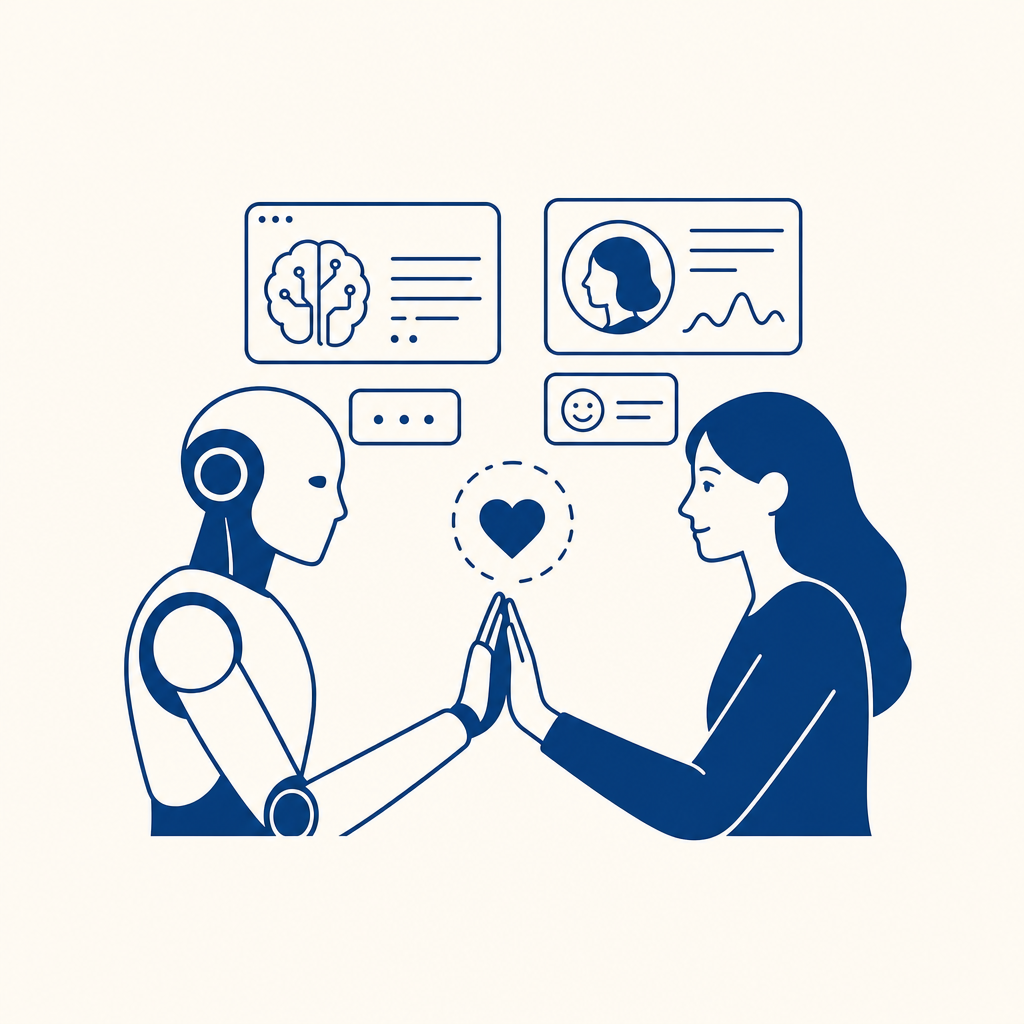
In an era where AI transitions from theoretical concepts to interactive entities, designing for connection becomes vital. This article delves into the interplay between embodied AI, user experience, and emotional intelligence, showcasing how effective design can foster trust, enhance human-robot interaction, and ultimately reshape our daily lives with AI companions.
Understanding Embodied AI
The evolution of embodied AI has opened new avenues for human-robot interaction (HRI), which poses unique challenges and opportunities distinct from traditional human-computer interfaces. In HRI, the social and emotional dimensions of interaction take center stage. Unlike standard interfaces that often rely on textual or visual communication, embodied AI, such as robots or smart companions, must engage users through physical presence, gestures, and non-verbal cues, creating a more immersive experience.
One illustrative case is that of social robots utilized in therapeutic contexts, such as robotic pets designed for elderly care. These robots can elicit emotional responses from users, enhancing companionship and eliciting trust, thus positively impacting well-being. On the opposite end, consider a service robot that fails to accurately interpret user intentions, resulting in frustration or fear. Such experiences underscore that thoughtful design is paramount.
Effective HRI requires designers to consider factors like anthropomorphism, responsiveness, and intuitive interaction, all directed toward cultivating a sense of agency and comfort. Fostering trust through design not only makes the robots more functional but enhances user acceptance, facilitating seamless integration into daily life. In this space, the design of interaction becomes as crucial as the AI’s algorithms.
The Importance of Human-Robot Interaction
As embodied AI becomes a more integral part of daily life, the nuances of human-robot interaction (HRI) emerge as a focal point in its design. Unlike standard human-computer interaction, HRI delves deeper into emotional and social dimensions, necessitating a design approach that fosters genuine connection. Robots, as physical embodiments of AI, invoke a unique set of expectations and behaviors from users. For instance, when humans engage with social robots, the dynamics change—they seek companionship, empathy, and understanding, not just functionality.
A notable case study is the interaction with PARO, a therapeutic robot designed to resemble a baby seal. Users have reported profound emotional responses, highlighting how thoughtfully designed robots can foster trust and emotional support. Conversely, negative experiences arise when robots fail to meet user expectations, as illustrated by certain telepresence robots that left users feeling disconnected despite their intended functions. These examples underscore the critical need for intentional design strategies that prioritize emotional engagement. By cultivating trust through HRI, designers can create embodied AI that resonates with users, ensuring technology’s integration into human lives is not only practical but also profoundly connective and meaningful.
Principles of AI UX/UI Design
In creating user experiences for AI systems, the principles of UX/UI design become essential for fostering connection and trust between users and technology. Key strategies include promoting intuitive usage through simplicity and clarity in design. Interfaces should facilitate seamless interaction, reducing cognitive load by ensuring that AI functions are understandable and predictable. Accessibility must also be prioritized; all users, regardless of their physical capabilities or technological familiarity, should find AI systems approachable and easy to navigate.
Emotional engagement is another crucial dimension. Interfaces that visibly acknowledge user emotions, through responsive feedback and personalization, can deepen connections and enhance user satisfaction. For example, incorporating empathetic dialogue in AI companions fosters a sense of companionship, making technology feel more relatable.
However, challenges abound in designing these interfaces. One major hurdle is the integration of complex AI systems while maintaining user-friendliness. To overcome this, adopting human-centered design approaches that focus on user testing and iterative refinement is vital. Acknowledging diversity in user needs and preferences allows for designs that resonate on a deeper level, bridging the gap between advanced functionality and meaningful user engagement.
Challenges in AI Adoption
As AI technologies advance, several barriers impede their widespread acceptance. Primary among these are concerns about safety, which often stem from a lack of understanding of AI capabilities and limitations. The fear of machines making autonomous decisions without human oversight can create a hesitancy to adopt AI solutions in everyday life.
Job displacement remains a significant fear as well. Many individuals anticipate that the integration of AI could result in reduced job opportunities, fostering resentment and resistance towards these technologies. Coupled with ethical implications, such as data privacy and algorithmic bias, these challenges create a perception gap that can hinder trust and acceptance.
Addressing these concerns is crucial for fostering a human-centered AI ecosystem. Effective design can play a transformative role in reshaping user perceptions. By creating transparent, intuitive interfaces that prioritize user agency and provide clear contextual cues about AI actions, designers can bridge the gap between human expectations and AI functionality. Furthermore, engaging users through participatory design processes helps demystify AI, empowering individuals to recognize its supportive role rather than viewing it as a threat. Thoughtful design can turn apprehension into acceptance, paving the way for AI technologies to resonate positively in everyday life.
Fostering Trust through Emotional Intelligence
In the realm of AI, fostering trust requires a nuanced understanding of emotional intelligence. When AI systems exhibit empathy and understanding, they can establish a genuine connection with users, promoting a sense of safety and reliance. Design choices that integrate emotive responses, such as tone, aesthetics, and interaction patterns, are critical in crafting a deeper user experience. For instance, adaptive conversational styles that reflect the user’s emotional state not only enhance engagement but also reassure users during interactions.
Moreover, successful implementations like the social robotics seen in healthcare illustrate the profound impact of emotional intelligence. Robots like Paro, a therapeutic seal, show how designing with emotional cues can lead to improved psychosocial outcomes for patients, fostering trust and positive emotional responses.
Designing AI with emotional intelligence isn’t merely about creating pleasant experiences; it’s about cultivating relationships based on mutual understanding. By embedding emotional analytics into user interactions, designers can better tailor responses, ensuring that AI not only functions effectively but also resonates on a human level. The intersection of emotional intelligence and design marks a pivotal path toward enhancing user trust and, consequently, broader AI adoption in everyday life.
The Future of AI and Human-Centered Design
As we look towards the future of AI and the overarching significance of human-centered design, we can anticipate transformative developments that prioritize emotional connectivity alongside technical sophistication. The concept of embodied AI takes center stage, where robots and smart companions move beyond simple task execution to engage users in relatable, human-like interactions. This evolution necessitates a foundation rooted in **human-robot interaction**, ensuring that these entities reflect a deep understanding of human behavior and emotional cues.
Emerging trends in creative applications of AI also hold immense promise; AI-driven tools that enhance artistry and design are reshaping user experiences. These tools not only augment creativity but also adapt to individual preferences, fostering a sense of partnership between the user and AI. In this context, **AI UX/UI design** becomes critical, where interfaces must prioritize intuitive engagement that resonates emotionally with users.
As we enhance **trust in AI**, the focus on **human-centered AI** will be paramount in bridging the perception gap between AI’s potential and its real-world impact. **Experience design** in AI must evolve to create interactions that are not merely functional but also meaningful. By envisioning a future where AI intuitively understands and responds to human emotions, we can cultivate technology that enriches daily life, transforming routine interactions into significant connections.
Conclusions
In conclusion, the journey towards effective human-centered AI design is crucial for the successful integration of intelligent systems into our lives. By prioritizing emotional intelligence, fostering trust, and creating meaningful interactions, we can bridge the gap between AI’s potential and its practical application, leading to a harmonious coexistence with our digital counterparts.