AI’s Double-Edged Sword: Securing Your Digital Frontier from Evolving Cyber Threats
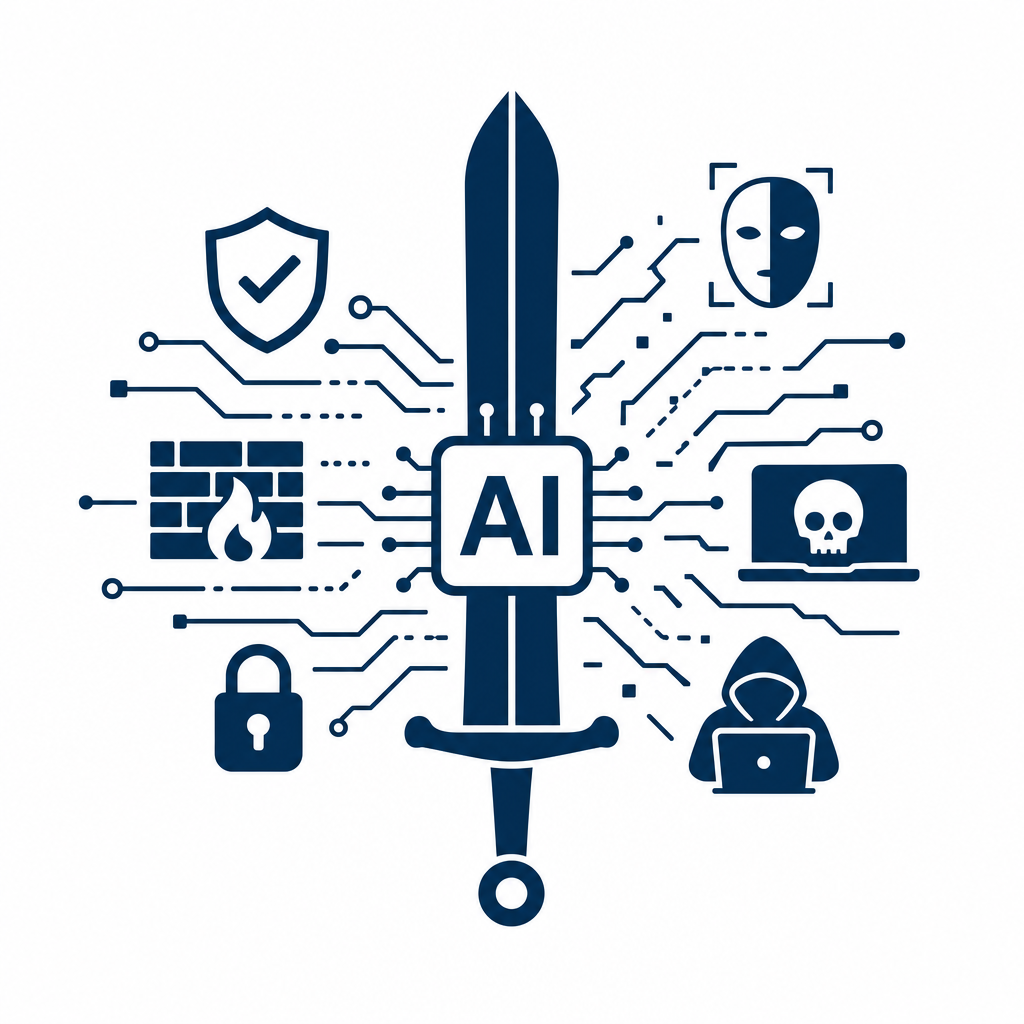
As artificial intelligence transforms the digital landscape, it introduces advanced tools for both innovation and malicious intent. This article delves into the implications of AI within cybersecurity, highlighting its capacity to create sophisticated threats while also offering unique defense mechanisms. We will explore how businesses can navigate this complex interplay and enhance their security postures effectively.
Understanding AI in Cybersecurity
As AI technology evolves, it has given rise to deepfakes, a phenomenon that poses significant threats in today’s cyber landscape. Deepfakes are AI-generated media that manipulate audio and visual content with alarming precision. This capability is increasingly exploited for misinformation campaigns, where deceptive narratives can spread rapidly, undermining trust in media and institutions. Additionally, deepfakes have been utilized in identity theft, enabling malicious actors to impersonate individuals convincingly, which can lead to financial fraud and reputational damage.
Detecting deepfakes presents a considerable challenge due to their sophistication and realism. Traditional methods of verification, such as metadata analysis, often fall short against the relentless advancement of deepfake technology. However, advancements in machine learning are driving the development of deepfake detection tools, which analyze inconsistencies and anomalies within the content. For instance, algorithms can now scrutinize minute details in facial expressions or voice intonations that may reveal artificial manipulation.
To combat these AI-generated threats, organizations must adopt robust digital defense strategies. Investing in advanced threat intelligence systems and AI governance frameworks is essential for proactively identifying and mitigating risks stemming from deepfakes. Such measures not only enhance enterprise security but also foster a culture of vigilance and awareness in a rapidly changing digital frontier.
The Rise of Deepfakes and Synthetically Generated Threats
The rise of deepfakes represents a troubling evolution in the cyber threat landscape, leveraging AI-generated media to disseminate misinformation and conduct identity theft. These realistic manipulations of video and audio can effortlessly create false narratives, leading to significant reputational damage for individuals and organizations alike. With the potential to fabricate events and voices, deepfakes can deceive audiences, subverting trust and authenticity in digital communications. The spread of manipulated content can fuel misinformation campaigns that mislead the public and stoke societal divisions, making detection crucial.
However, identifying deepfakes poses substantial challenges. Traditional methods fall short against the sophistication of AI algorithms, particularly as they evolve. Conventional video analysis techniques often struggle to discern subtle inconsistencies introduced by deep learning models. To combat this, researchers and companies are investing in advanced detection technologies that utilize machine learning to spot anomalies, such as irregular facial movements or mismatched audio levels. These tools aim to bolster digital defense, contributing to an enterprise security strategy that emphasizes robust threat intelligence and data protection. Despite these strides, the arms race between deepfake generation and detection technology remains ongoing, underscoring the need for comprehensive AI governance to safeguard against evolving threats.
Exploitable Software Vulnerabilities in AI Frameworks
As businesses increasingly adopt AI technologies, a corresponding rise in exploitable software vulnerabilities has emerged, posing significant risks. AI frameworks can inadvertently introduce new software bugs, which cybercriminals can leverage for malicious purposes. One notable vulnerability arises from machine learning algorithms that require extensive data for training. If this data is not adequately secured, attackers can manipulate it to influence AI outcomes, leading to incorrect decision-making in critical applications, such as financial services or healthcare.
In real-world scenarios, vulnerabilities in AI systems manifest in various forms. For instance, image recognition systems can be deceived through adversarial attacks, where slight modifications to input data yield drastically different results. This has significant implications for sectors relying on security systems, such as surveillance and biometric authentication, where an AI’s misidentification can result in unauthorized access.
Moreover, the complexity of AI architectures often leads to unpatched software bugs, heightening the attack surface for cybercriminals. Organizations relying on these frameworks must prioritize robust testing and validation processes to uncover such vulnerabilities. Establishing a comprehensive governance framework around AI can enhance enterprise security by ensuring that AI deployments are not only advanced but also resilient against emerging threats.
Intelligent Malware and Automated Attacks
As AI continues to evolve, it profoundly impacts the landscape of cybersecurity, particularly in the realm of malware. Intelligent malware leverages AI to engage in sophisticated behaviors that can often bypass traditional security measures. Characteristics of such malware include self-learning capabilities, allowing it to analyze and adapt to security environments dynamically. This adaptability enables it to modify its tactics in real-time, maximizing its chances of breaching defenses.
Automated attacks executed by intelligent malware can flood networks or systems with varied attacks simultaneously, overwhelming detection systems designed for linear response patterns. For instance, a known case involved a ransomware variant that, once deployed, utilized machine learning algorithms to efficiently identify and encrypt high-value data, minimizing the time before detection and response by security teams.
Additionally, this malware often employs social engineering tactics, enhanced by data mining tools that target specific vulnerabilities in personnel. As organizations increasingly leverage AI for operational efficiencies, the implications are glaring. The introduction of intelligent malware calls for a reevaluation of enterprise security frameworks to address the risks posed by ever-evolving, adaptive threats that can exploit AI’s advanced functionalities to orchestrate automated attacks. Understanding these threats is critical for developing robust cybersecurity measures.
Building Proactive Defense Strategies Against AI Threats
As organizations increasingly face AI-enhanced cyber threats, implementing proactive defense strategies is crucial. One effective measure is to prioritize threat intelligence to access real-time data about potential threats and vulnerabilities. By leveraging AI-driven analytics, businesses can anticipate and respond to emerging threats promptly, distributing actionable insights across their digital architecture.
Continuous monitoring is another essential defense mechanism. Employing advanced algorithms to monitor network behavior allows for immediate detection of anomalies that could signal cyber threats. This can include unusual access patterns or data exfiltration attempts, enabling swift mitigation efforts before significant damage occurs.
Moreover, employee training should not be overlooked. Regular workshops focused on cybersecurity awareness and the identification of AI-related threats, such as deepfakes and phishing attempts, can significantly bolster a company’s defense. Equipping staff with the knowledge to recognize these threats can transform them into a vital line of defense.
To mitigate risks tied to AI vulnerabilities, organizations should establish best practices, such as employing AI in cybersecurity tasks while ensuring robust oversight. This includes validating AI systems regularly to prevent the exploitation of legitimate tools by malicious actors, thus enhancing overall digital resilience.
The Future of AI Governance in Cybersecurity
As AI technologies evolve, so too must our approaches to governance in the realm of cybersecurity. The rise of AI exacerbates existing vulnerabilities while introducing new ethical dilemmas regarding data protection and user privacy. To navigate these complexities, robust policies are paramount. Effective AI governance frameworks must address the dual-use nature of AI; while it can enhance security measures, it can also empower malicious actors. Establishing guidelines for responsible AI deployment should become a priority for organizations.
Central to this governance is the integration of ethical considerations, not just technical demands. The development of AI models needs transparency in their functions, performance metrics, and the potential biases they may exhibit. Initiatives like the AI Ethics Guidelines from the European Commission and frameworks proposed by organizations such as NIST aim to provide essential guidance. These paradigms encourage accountability, ensuring stakeholders are responsible for the AI systems they develop and deploy.
Furthermore, organizations should actively participate in industry-wide collaborations focused on threat intelligence and knowledge sharing. This community approach allows for a united front against evolving cyber threats, fosters innovation in security measures, and enhances the protection of sensitive data, reinforcing the need for a comprehensive governance strategy that keeps pace with technological advancements.
Conclusions
In conclusion, while AI presents immense potential for enhancing cybersecurity measures, it simultaneously facilitates new and complex threats that demand thorough understanding and proactive strategies. Organizations must embrace a dual approach of utilizing AI for defense while implementing robust safeguards against its misuse. By doing so, businesses can confidently secure their digital frontiers against evolving cyber threats.