The Rise of the AI Workforce: How Autonomous Agents are Reshaping Business and Creativity
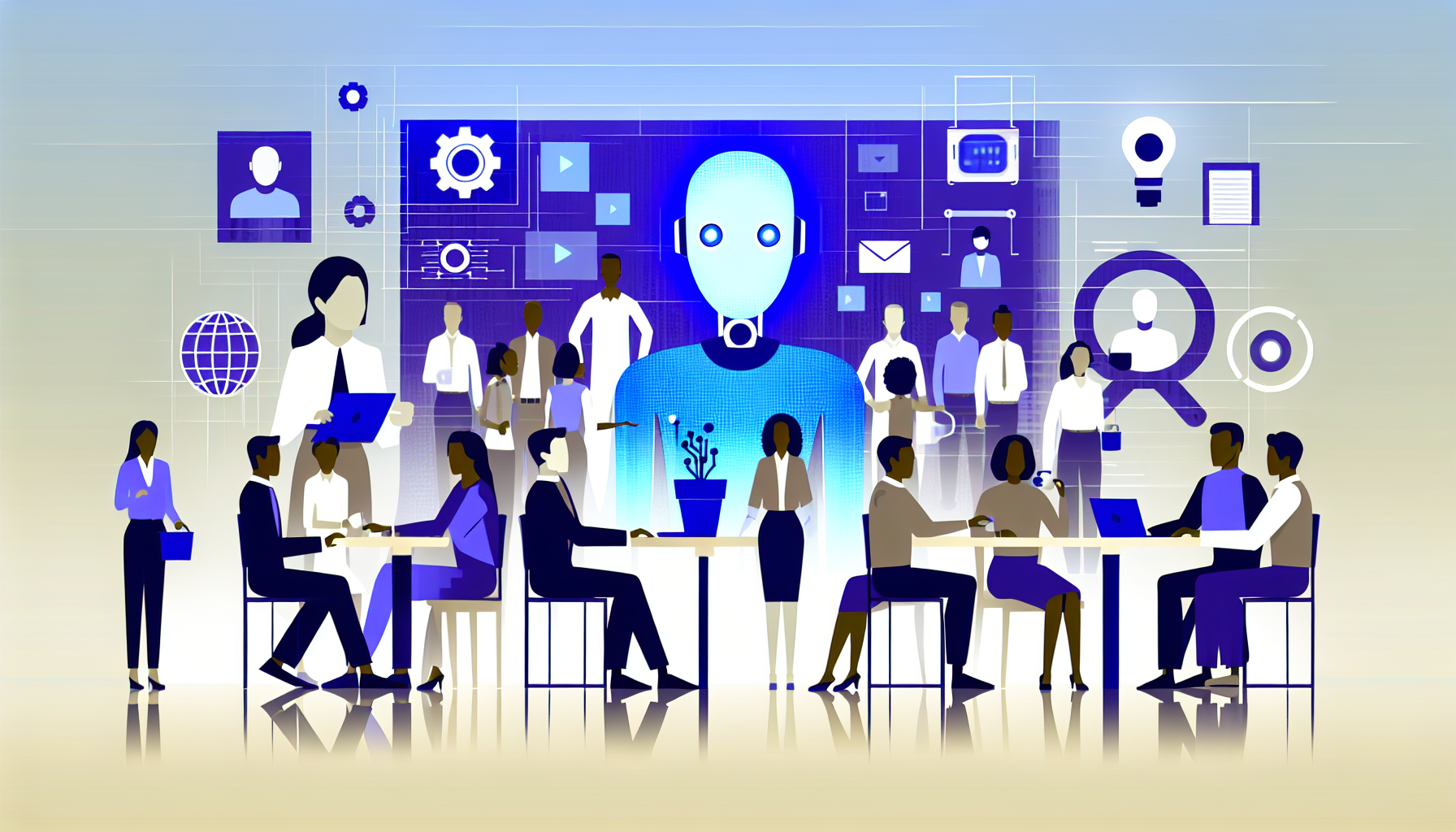
As artificial intelligence continues to evolve, autonomous agents are becoming integral to business operations. This article delves into how these AI agents are not only automating mundane tasks but also enhancing creativity and decision-making processes, reshaping the workforce structure and impacting industries like digital marketing and content creation.
Understanding AI Agents
AI agents represent a leap in the realm of digital automation, epitomizing the progress toward machines that can make decisions independently. At the core of this technology are advanced algorithms that enable AI agents to process vast amounts of data inputs and extract meaningful patterns—a process often referred to as machine learning. This continuous learning mechanism allows AI agents to refine their capabilities over time, adapting not only to new data but also to shifting business objectives.
The applications of AI agents are diverse and impactful. They can perform operational tasks like bug hunting within software systems, troubleshoot problems autonomously, and streamline workflows. In sectors like digital marketing, AI agents can analyze consumer behavior, predict trends, and optimize campaigns in real-time, significantly enhancing efficiency. Furthermore, their integration into creative domains allows for ideation that complements human creativity, generating unique content ideas or marketing strategies that resonate with target audiences.
As companies increasingly turn to AI for automation, the role of human workers shifts toward oversight, collaboration, and complex decision-making. The rise of AI agents necessitates a reevaluation of workforce structures, emphasizing a partnership between human intuition and AI precision to drive business growth.
The Evolution of Autonomous AI
The rise of autonomous AI systems can be traced back to the 1950s, where early forms of artificial intelligence emerged from rule-based algorithms and simplistic decision trees. These foundational technologies laid the groundwork for more sophisticated iterations. By the 1980s and 1990s, the focus shifted towards machine learning, which enabled systems to recognize patterns and adapt to new data. This pivotal period marked the emergence of what we now know as autonomous agents—AI systems capable of executing complex tasks independently.
Modern autonomous AI encompasses a variety of agents, from those designed for operational tasks to more advanced creative entities. For example, digital marketing AI utilizes predictive analytics to tailor content strategies while autonomous agents in areas like customer service leverage natural language processing for dynamic interactions.
As these technologies have evolved, they have become adept at integrating with existing workflows, enhancing both business efficiency and creative ideation. The capabilities of autonomous AI extend beyond simple task execution; they are now equipped to conduct sophisticated analyses, foresee market trends, and even contribute to content creation, thus reshaping the workforce structure. As a result, businesses are not only experiencing significant growth but are also redefining the concept of human-AI collaboration in the future of work.
AI in Business Operations
The integration of AI in business operations has revolutionized how organizations manage their day-to-day activities. AI agents, capable of autonomously performing tasks like bug hunting, data analysis, and project management, have emerged as indispensable tools in various industries. For instance, software firms now employ AI agents to identify and rectify bugs in code before they affect end users, significantly decreasing downtime and enhancing software reliability.
One notable case study is a leading e-commerce platform that implemented an AI-driven system for inventory management and demand forecasting. By analyzing vast amounts of data, the AI streamlined inventory processes, ensuring products are in stock when needed, thus reducing operational costs and increasing customer satisfaction.
Additionally, AI’s role in project management cannot be overstated. AI agents facilitate efficient resource allocation and timeline predictions, enabling teams to meet deadlines consistently. Companies like Asana and Trello are integrating AI features to automate task assignments and progress tracking, enhancing overall productivity.
The implementation of AI agents not only boosts efficiency but also supports data-driven decision-making, allowing businesses to thrive in a competitive landscape while focusing on innovation and growth.
The Future of Work
As AI integration deepens within business landscapes, the workforce structure is poised for significant transformation. Enterprises are beginning to develop a hybrid work environment where **AI agents** and human employees coexist, complementing each other’s roles rather than merely replacing traditional jobs. This shift is likely to redefine job responsibilities, with humans focusing on complex problem-solving, emotional intelligence, and strategic decision-making, while **autonomous AI** handles repetitive or data-driven tasks.
With the rise of the **AI workforce**, new skills will be paramount. Employees will need to embrace technology, developing proficiency in working alongside AI tools and utilizing data analytics to inform their strategies. The emphasis will shift toward adaptability, critical thinking, and collaboration—skills that machines cannot replicate. As businesses deploy **AI for operational efficiency**, they will also need to maintain robust engagement strategies to preserve team morale and ensure that their human resources remain motivated and cohesive.
Moreover, organizations that prioritize employee engagement will foster a culture of innovation and creativity, enabling teams to leverage **AI automation** in ways that enhance productivity without compromising job satisfaction. This balanced approach to **AI integration** can lead to sustainable **business growth** while promoting a future of work where humans and machines work in synergy.
AI and Creativity
AI is transforming the landscape of creativity, especially in digital marketing and content creation. Businesses are increasingly adopting *autonomous AI agents* that not only aid in creative ideation but also streamline design processes and enhance personalization in content strategies. For instance, AI-driven platforms are now capable of generating compelling ad copy in real-time, analyzing trends to tailor messages that resonate with target audiences.
One notable example is the use of AI algorithms to automate the design of marketing materials, where AI tools analyze past campaign performances to create optimized designs that evoke higher engagement rates. These *creative AIs* empower marketers by providing data-backed design choices, thus maximizing their impact while minimizing time spent on repetitive tasks.
However, the synergetic relationship between human creativity and AI assistance requires careful balance. Humans bring intuition and emotional depth to storytelling, while AI augments this process through vast data analysis and rapid execution. In this evolving context, marketing teams that leverage this collaborative dynamic can achieve innovative outcomes, driving *business growth* while maintaining the essence of their brand’s narrative. The integration of AI not only increases *business efficiency* but also opens new avenues for innovation, heralding a future where creativity flourishes at an unprecedented pace.
Navigating Human-AI Collaboration
As businesses increasingly adopt autonomous AI agents, fostering effective collaboration between human teams and these advanced technologies is paramount. The integration of AI into various industries is not simply about replacing tasks but enhancing human capabilities, ensuring that workforce dynamics evolve constructively. Best practices include forming cross-functional teams where AI agents work alongside human experts, leveraging each other’s strengths.
Business leaders must cultivate a culture of open communication, allowing for feedback loops between human workers and AI systems. This communication can help refine AI outputs, ensuring they align with human input and expectations. Additionally, organizations should invest in training programs that familiarize employees with AI tools and capabilities, promoting understanding and reducing resistance to change.
However, challenges remain, especially concerning ethical considerations. It is essential to address concerns about job displacement and the potential biases inherent in AI algorithms. Companies must establish ethical guidelines that prioritize transparency and accountability in AI operations. By navigating these challenges thoughtfully, businesses can not only harness the potential of AI automation but also facilitate a harmonious human-AI partnership that fuels innovation and drives sustainable growth.
Conclusions
The integration of autonomous AI agents in various business functions is transforming work dynamics and enhancing efficiency. As companies adopt these advanced technologies, understanding the implications for human collaboration and workforce structure will be essential for navigating the future of work as we enter an era co-driven by human and AI capabilities.