The Great Reskilling Preparing Your Workforce for the AI and Automation Era
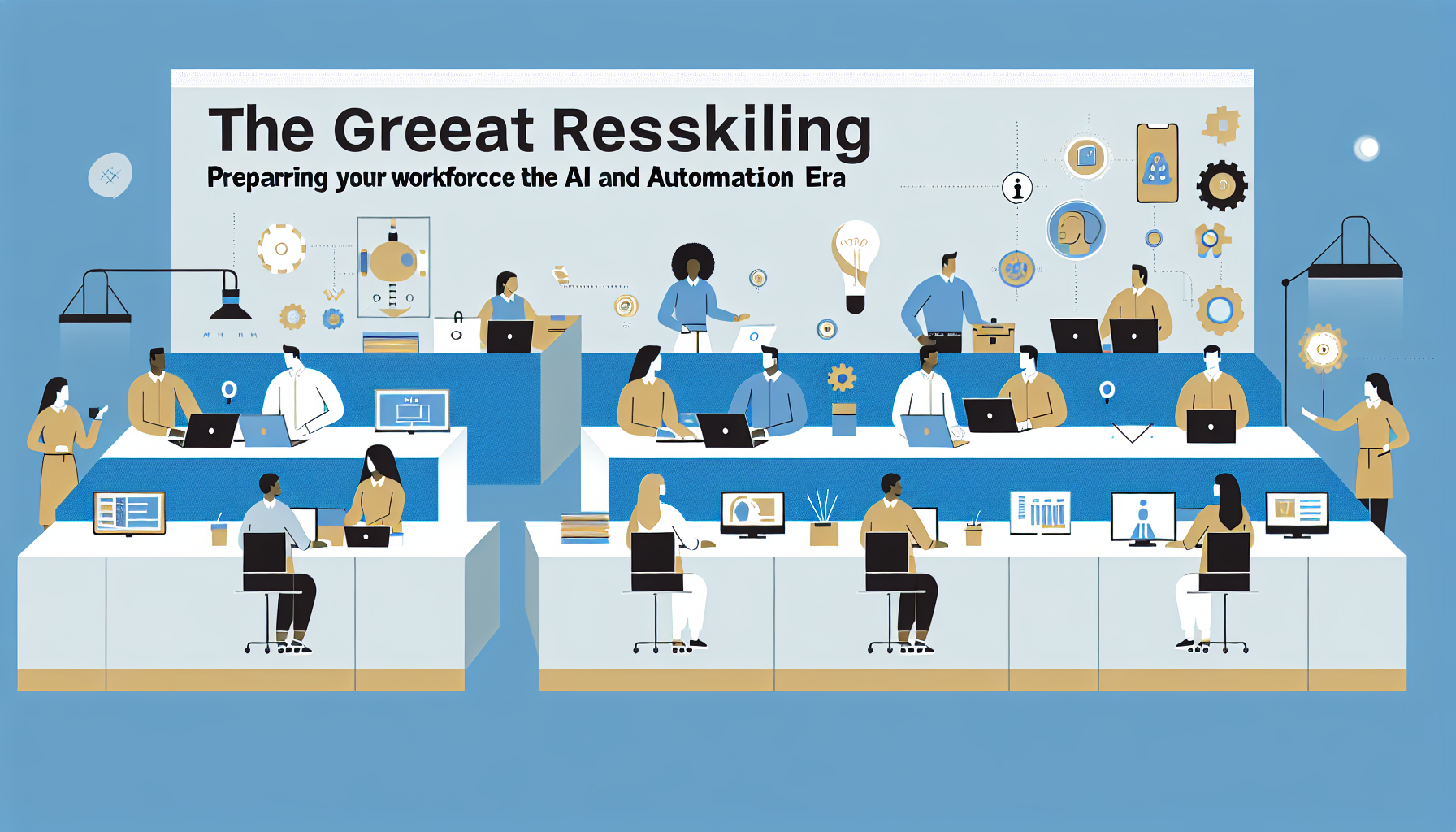
As technology evolves, the workplace undergoes significant transformation, demanding a proactive approach to workforce development. The concepts of reskilling and upskilling have emerged as crucial strategies for organizations aiming to retain a competitive edge in the face of AI and automation. This article delves into the necessity of these strategies and how they can be effectively implemented.
Understanding Reskilling and Upskilling
In the rapidly evolving landscape of work, understanding reskilling and upskilling is paramount for organizations aiming to thrive alongside AI and automation. **Reskilling** refers to training employees for new roles or industries, while **upskilling** involves enhancing their existing skills to adapt to technological changes. Both strategies are essential as they empower employees to navigate the complexities of the modern workforce, particularly in a climate heavily influenced by automation.
The primary difference between reskilling and upskilling lies in their focus: reskilling prepares individuals for entirely different job roles, whereas upskilling enhances their capabilities within their current positions. This distinction is crucial for workforce development, as businesses aiming to retain talent must invest in both approaches to ensure adaptability.
Numerous companies have successfully implemented these strategies. For instance, Accenture has launched comprehensive upskilling initiatives, resulting in a more agile workforce and increased employee satisfaction. Similarly, AT&T’s reskilling efforts, aimed at transitioning employees into digital-centric roles, have proven instrumental in reducing turnover and fostering loyalty. Such case studies illustrate that investing in employee development not only enhances skill relevance but ultimately boosts retention and organizational resilience in the face of technological change.
The Impact of AI and Automation on Jobs
As AI and automation technologies evolve, they exert a profound influence on job dynamics across various sectors. Research indicates that routine, repetitive tasks are at the highest risk of automation, particularly in industries such as manufacturing, customer service, and transportation. Roles like telemarketers, data entry clerks, and assembly line workers face significant threats as organizations increasingly adopt intelligent systems to enhance efficiency and productivity. However, this shift does not imply a blanket elimination of jobs; rather, it underscores a transformation in the nature of work itself.
In the future workforce, the demand for skills will pivot toward creativity, critical thinking, emotional intelligence, and advanced technical abilities. As businesses adapt, they will require workforce members who can interact harmoniously with AI tools and drive innovation. The skills gap is already manifesting, with research illustrating that up to 85 million jobs may be displaced by automation by 2025. Consequently, effective talent development strategies must prioritize not only immediate training needs but also long-term learning frameworks to cultivate adaptability.
By acknowledging the impact of AI and automation, organizations can proactively invest in reskilling and upskilling initiatives that not only equip employees to thrive but also foster resilience within the workforce.
Identifying Future Skill Gaps
As the landscape of work evolves, organizations must proactively identify future skill gaps to remain competitive in an AI-centric environment. One effective method for anticipating these gaps involves conducting a comprehensive skills assessment to benchmark current competencies against the future demands of various roles. Tools such as competency frameworks and skills matrices help organizations visualize discrepancies between existing employee skills and those required for upcoming technologies.
Additionally, engaging in scenario planning can provide insights into potential shifts in job functions influenced by automation and AI integration. By forecasting technological advancements and their implications, businesses can prioritize skill sets that are likely to be in higher demand. Surveys and interviews with industry experts can also aid in understanding emerging competencies.
Continuous monitoring of labor market trends is crucial. Utilizing data analytics can help organizations track skills in demand, ensuring timely adjustments to workforce development strategies. Establishing partnerships with educational institutions for research and collaborative training solutions can further bridge existing skill gaps, enabling organizations to cultivate a workforce that is not only equipped for today but is also adaptive to the challenges of tomorrow’s automated landscape.
Developing Effective Training Programs
Developing effective training programs requires a thoughtful approach that aligns with the identified skill gaps of the workforce. Businesses should first create a tailored training curriculum based on both the current competencies of employees and the anticipated demands of future roles influenced by AI and automation.
Utilizing diverse training modalities is key to enhancing engagement and retention. **Online courses** offer flexibility and accessibility, enabling employees to learn at their own pace. **Workshops** can facilitate hands-on experiences, allowing employees to practice new skills collaboratively. Additionally, **on-the-job training** creates a practical learning environment where employees can apply skills in real-time, reinforcing their learning through immediate application.
To ensure successful implementation, it is crucial to encourage employee input in shaping their training pathways. Soliciting feedback can foster a sense of ownership and increase motivation. Furthermore, incorporating gamification elements and recognition systems can drive engagement by making learning more enjoyable and rewarding.
Regular evaluations of training effectiveness, paired with adapting to new insights and technologies, allow organizations to stay ahead in talent development. By investing in comprehensive training programs, businesses empower employees to thrive in an evolving work landscape while nurturing a skilled, AI-ready workforce.
Fostering a Culture of Continuous Learning
Creating an organizational culture that prioritizes continuous learning is critical for companies aiming to thrive in the era of AI and automation. A culture that values learning fosters employee engagement, adaptability, and innovation, ultimately driving performance and retention. Companies like IBM and Amazon exemplify such environments, where continuous development is embedded into their operational fabric.
IBM invests in programs such as “Your Learning,” which offers personalized learning paths aligned with employee career needs and organizational goals. As a result, IBM reported that learners are more loyal and productive, benefiting both the employees and the company.
Similarly, Amazon’s “Upskilling 2025” initiative aims to retrain one-third of its U.S. workforce in high-demand skills. This commitment not only equips employees for future roles but also enhances the company’s competitive edge by ensuring a skilled workforce ready to tackle emerging challenges.
Implementing a culture of continuous learning involves regularly encouraging employees to pursue knowledge, providing resources for self-driven learning, and recognizing achievements. As AI and automation reshape industries, fostering such a culture is essential to harness human potential, allowing businesses to remain agile and innovative while effectively managing the changing landscape.
The Role of Leadership in Talent Development
Effective talent development is a critical responsibility that falls on the shoulders of leadership in the era of AI and automation. Leaders must champion upskilling and reskilling initiatives, empowering their teams to navigate the complex landscape of technological change. By actively participating in these processes, leaders can foster a culture that prioritizes continuous learning, ensuring that employees feel supported in their growth journeys.
To promote talent development, leaders can take several strategic steps:
1. **Lead by Example**: When leaders engage in their own upskilling, it sets a powerful precedent. This encourages employees to embrace learning as a norm rather than an exception.
2. **Allocate Resources**: Investing in training programs, workshops, and industry conferences is essential. By providing employees with access to cutting-edge resources, leaders demonstrate a commitment to their professional development.
3. **Regularly Assess Skills**: Implementing skill gap analyses can identify areas for growth. This data-driven approach informs training initiatives and ensures that employees are equipped with relevant capabilities.
4. **Feedback Loops**: Creating mechanisms for feedback allows leaders to evaluate the effectiveness of training initiatives. This iterative process not only improves training outcomes but also reinforces the organization’s commitment to employee development.
By embracing these strategies, leaders play a pivotal role in preparing their workforce for the future of work, transforming potential challenges posed by automation into opportunities for growth and innovation.
Conclusions
In a rapidly changing technological landscape, embracing reskilling and upskilling is essential for both employees and organizations. Continuous learning fosters adaptability and resilience, ensuring that the workforce is equipped to navigate the challenges presented by AI and automation. Companies that prioritize development will not only thrive in the new economy but also enhance employee satisfaction and retention.