The Agent Economy How AI Agents Are Reshaping Web Development and Digital Interaction
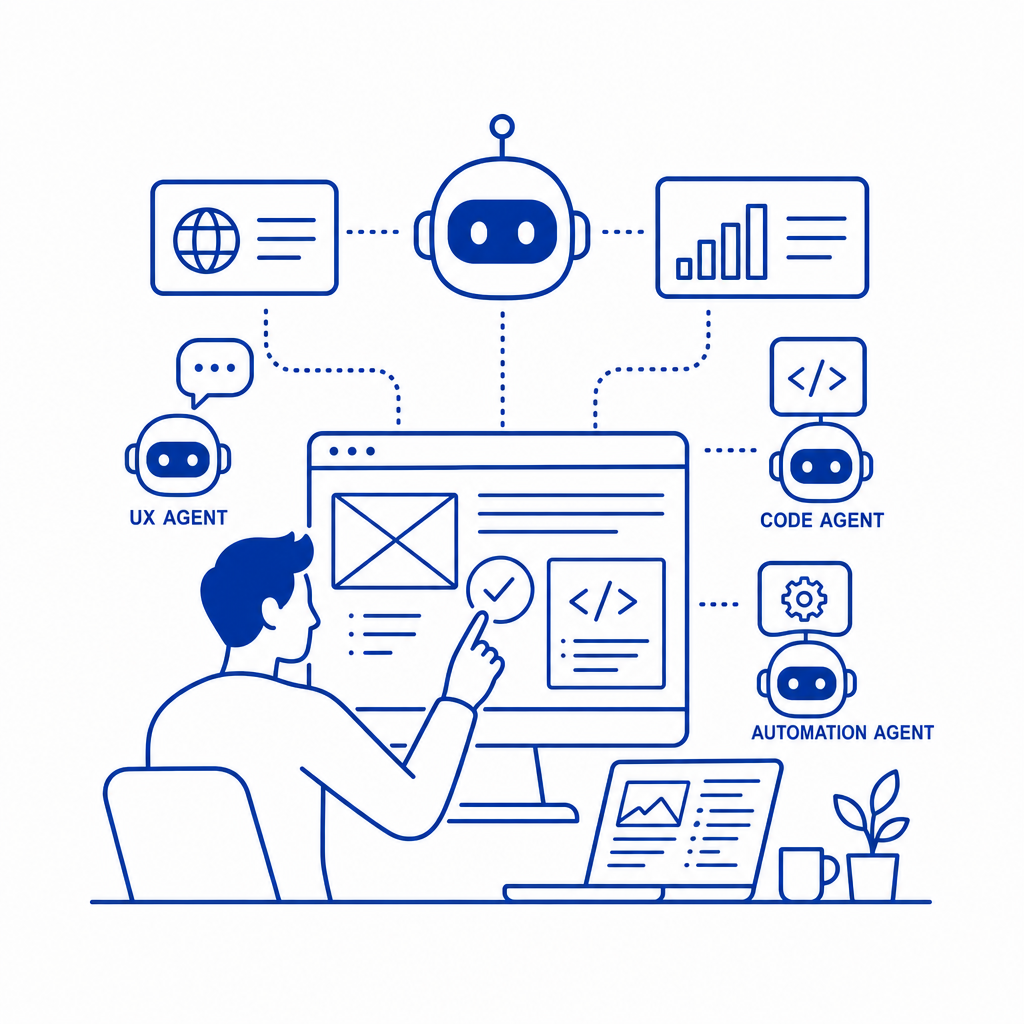
As AI agents gain sophistication, they are transforming web development and digital interactions. No longer just chatbots, these advanced tools are emerging as autonomous personal assistants, reshaping user experiences and creating new business models. This article discusses the implications of AI agents for businesses and how to strategically adapt in the evolving landscape of digital technology.
Understanding AI Agents
The rise of AI agents in the digital ecosystem is intricately linked to the evolution of web development, which has witnessed a dramatic shift from static websites to highly interactive web applications. Initially, websites were mere collections of HTML pages, offering limited functionality and interactivity. However, as user expectations began to grow, the demand shifted towards dynamic web applications that could respond to user input, present personalized content, and foster deeper engagement.
The emergence of AI agents has catalyzed a new wave of innovation in this space, pushing developers to rethink their approaches. APIs have become crucial in enabling seamless communication between web applications and AI agents, allowing for real-time data access and functionality. Additionally, modern frameworks like React and Angular lend themselves well to the creation of responsive, user-driven applications that can integrate AI capabilities, enhancing both performance and user experience.
AI-driven tools have revolutionized development efficiency, automating repetitive tasks, optimizing code, and even assisting in user interface design through predictive analytics. This transition not only streamlines the development process but also elevates the end-user experience, offering sophisticated interactions that were previously unfathomable. As businesses now embrace these technologies, the landscape of web development continues to shift, laying the groundwork for innovative, agent-centric digital interactions.
The Evolution of Web Development
The history of web development has been marked by significant milestones, evolving from simple static pages to complex dynamic web applications. In the early days of the internet, websites were largely informational, consisting of unchanging content that provided limited user interaction. As technology advanced, developers began to create dynamic websites powered by server-side scripting, enabling customization and interactivity.
This shift opened the door for sophisticated AI agents to reshape modern development practices. APIs have become essential, allowing different systems to communicate and share data seamlessly, creating a foundational layer for integrating AI functionalities within web applications. Frameworks like React and Angular now support the dynamic nature of user interfaces, accommodating the real-time responsiveness that AI-driven solutions require.
Moreover, AI-driven tools have drastically improved development efficiency. Automated code generation, debugging systems, and performance optimization tools mean developers can focus on creativity and innovation rather than repetitive tasks. These advancements enhance user interface design, as AI agents inform and adapt layouts based on user behavior and preferences. The emergence of such tools signals a transformative shift in web development practices, paving the way for an increasingly agent-centric digital landscape.
Revolutionizing User Experience
As AI agents increasingly permeate web development and digital interactions, they are fundamentally altering the user experience (UX). These intelligent systems enable personalized interactions that are both intuitive and relevant. Through advanced algorithms, AI agents can learn from user behaviors, preferences, and feedback, offering tailored recommendations that significantly enhance engagement.
Real-time assistance provided by AI agents ensures that users receive support instantly, reducing friction in the interaction process. For example, platforms like Shopify utilize AI chatbots not just for customer inquiries but as virtual sales agents that guide users through their purchasing journey. These capabilities result in higher user satisfaction, as clients feel understood and prioritized.
Additionally, predictive capabilities allow AI agents to anticipate user needs based on historical data, thereby creating a seamless experience. Companies like Netflix leverage these insights to recommend content that users are likely to enjoy, driving both engagement and retention.
Crucially, the role of emotional intelligence cannot be overlooked. When AI agents exhibit empathy and understanding in their interactions, they build trust and foster a sense of connection with users. As UX continues to evolve in this direction, businesses must prioritize these elements to stay competitive in the agent economy.
Business Models in the Age of AI Agents
As AI agents become integral to digital interaction, they are prompting organizations to rethink their business models. Various industries are adapting traditional frameworks like subscription services, freemium models, and pay-per-use systems to leverage the capabilities of AI. These models not only enhance service delivery but also provide businesses with valuable data on user behavior and preferences.
In a subscription-based model, businesses can offer tiered access to advanced AI functionalities—enabling customers to choose packages based on their unique needs. This personalization fosters loyalty as users feel their specific requirements are met, similar to the tailored experiences previously discussed. The freemium model allows users to experience essential AI functions at no cost, encouraging them to upgrade based on perceived value. Pay-per-use systems can cater to demand-based services that utilize AI agents, ensuring businesses only charge for what’s consumed.
Furthermore, the shift towards agent-first strategies is reshaping sales and marketing. AI agents can provide real-time insights, automate lead generation, and personalize marketing efforts, thereby enhancing customer engagement while reducing operational costs. Embracing these new business models equipped with AI automation will be critical as organizations navigate the agent economy’s landscape.
Creating an Agent-First Strategy
Creating an agent-first strategy requires a deliberate approach focused on understanding user needs, integrating AI agents into existing systems, and ensuring seamless interactions. The first step is conducting comprehensive user research to identify pain points and desired functionalities. Engaging with users through surveys and feedback can unveil essential insights, helping to tailor the agent’s capabilities accordingly.
Next, businesses should assess their current infrastructure, ensuring that their systems can effectively support AI agents. This might involve upgrading technology stacks, optimizing APIs for data exchange, or enhancing security measures to safeguard user information.
Designing user interfaces that promote seamless human-agent collaboration is crucial. Interfaces should facilitate intuitive interactions, where users can quickly comprehend how to engage with the AI. Utilizing conversational design principles, including clear prompts and context-aware suggestions, enhances the experience further.
Addressing ethical considerations is paramount. Companies must ensure transparency in how AI agents operate and handle personal data. Incorporating robust feedback loops allows users to voice concerns and suggest improvements, fostering trust and enhancing the agent’s effectiveness in fulfilling user needs.
Future Trends and Challenges
As we look towards the future, the evolution of AI agents promises transformative changes not only in web development but also in how users engage with digital platforms. **Advancements in AI technology** are expected to push the boundaries of what agents can do, enabling them to provide increasingly personalized and context-aware interactions. This will lead to a more intuitive **user experience**, where AI agents anticipate needs and streamline workflows without constant user input.
However, with these advancements come significant **privacy implications**. As AI agents gather and process larger volumes of personal data, the potential for misuse or data breaches increases. Organizations must navigate this landscape carefully, emphasizing transparency and consent to build trust. The demand for **regulation** will also grow, as governments aim to establish frameworks that ensure accountability and ethical AI usage.
To thrive in this new environment, businesses must adopt proactive strategies and remain **agile**, continuously adapting to new technologies and market demands. This includes investing in robust data protection measures and fostering a culture of innovation that embraces change. Organizations that prioritize adaptability and ethical considerations will be well-positioned to leverage the full potential of the **agent economy**.
Conclusions
The rise of AI agents marks a significant shift in web development and user interaction. By embracing agent-first strategies, fostering intuitive designs for human-agent collaboration, and rethinking business models, companies can thrive in this new landscape. Understanding and adapting to the ‘agent economy’ is crucial for staying competitive and providing exceptional user experiences.