The Algorithmic Eye: Navigating AI’s Impact on Public Trust and Surveillance
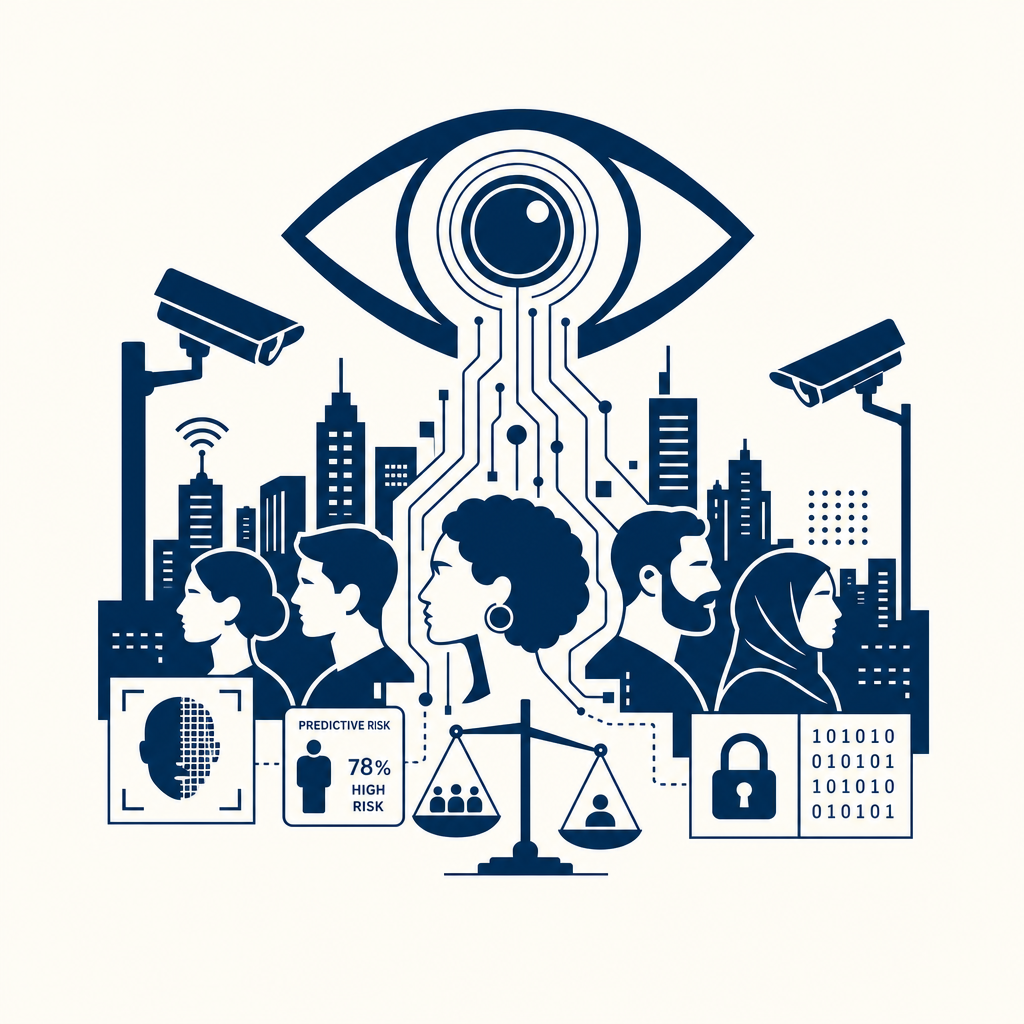
The advent of Artificial Intelligence (AI) has revolutionized various sectors, particularly in public safety and surveillance. This article explores how governments and organizations deploy AI technologies, examining ethical dilemmas, biases, and the necessity of safeguarding public trust. As AI becomes the ‘algorithmic eye’ monitoring our societies, a profound discussion on responsibility and governance is essential.
Understanding AI in Public Safety
As AI technologies become integral to public safety, various surveillance systems are emerging, powered by sophisticated algorithms. One of the most prevalent forms is **facial recognition technology**, which utilizes machine learning algorithms to identify individuals based on their facial features. This technology can be deployed in crowded environments, such as airports and public events, allowing for real-time identification of persons of interest, thereby enhancing security measures.
Another significant advancement is the **license plate reader (LPR)** systems that capture and process images of vehicle license plates. These systems work by using optical character recognition to convert images into usable data, which can then be matched against databases of stolen vehicles or wanted individuals. The integration of LPRs into law enforcement databases aids in quick identification, contributing to public safety during routine patrols.
**Predictive analytics**, another critical application, analyzes vast amounts of data, including crime statistics and social media activity, to forecast potential criminal activities. This capability allows law enforcement agencies to allocate resources more efficiently. However, the implementation of these technologies raises pressing concerns over privacy and data security.
Without stringent governance and ethical frameworks, the efficacy of surveillance technologies may be overshadowed by risks of algorithmic bias and invasion of privacy, challenging the very public trust they seek to uphold.
The Mechanics of Surveillance Technology
Surveillance technologies powered by AI are rapidly evolving, becoming a fundamental pillar in policing and public safety initiatives. Among the most prominent tools is facial recognition technology, which utilizes sophisticated algorithms to detect and identify individuals from images or video feeds. This system operates by mapping facial features and comparing them against extensive databases, enhancing law enforcement’s ability to track suspects in real-time. However, the implementation of such technology raises significant concerns regarding privacy and the potential for erroneous identifications.
License plate readers (LPRs) function similarly, capturing images of vehicle license plates and processing the data to monitor traffic patterns or track stolen vehicles. Though effective in increasing operational efficiency, the large-scale data collection presents risks of misuse and data breaches, challenging the balance between security and individual privacy.
Predictive analytics is another critical advancement, analyzing patterns in crime data to forecast potential criminal activities. While this can allocate resources more effectively, reliance on historical data can inadvertently perpetuate biases, leading to disproportionate targeting of specific communities.
As these technologies integrate into existing systems within smart cities, the importance of robust governance frameworks becomes imperative to ensure responsible deployment, safeguarding public trust while harnessing the capabilities of AI surveillance.
Ethical Dilemmas in AI Surveillance
The ethical dilemmas stemming from AI surveillance systems underscore a profound tension between security and individual freedoms. The implications of constant monitoring challenge the very fabric of personal privacy, as the line between safety and intrusion blurs. With advanced technologies, citizens find themselves under perpetual observation, raising questions about consent and the extent to which individuals are aware of their surveillance environment.
As societal norms evolve, perceptions of privacy shift significantly; what was once considered unacceptable may become normalized. For instance, the acceptance of AI-driven systems during public events highlights a growing complacency towards surveillance. However, this comes at the cost of individual agency and autonomy, fostering a culture where citizens might feel pressured to conform to ever-watchful eyes.
Different perspectives emerge on ethical surveillance practices. Some argue that transparency and public discourse are essential to maintaining trust. Others suggest that a balance must be struck, prioritizing security while respecting personal freedoms. Engaging diverse viewpoints can help build frameworks that ensure responsible and ethical deployment of surveillance technologies, ultimately safeguarding the delicate equilibrium between societal safety and individual rights.
Algorithmic Bias and Its Consequences
As AI systems grow more prevalent, the issue of algorithmic bias in predictive policing emerges as a critical concern. Algorithms designed to enhance public safety can inadvertently perpetuate and exacerbate existing societal inequalities. For instance, historical crime data used to train these systems often reflect systemic biases against marginalized communities. Such biases manifest in skewed predictions that disproportionately target these groups, leading to increased surveillance and policing in areas already facing socio-economic challenges.
Examples abound, including the case of COMPAS (Correctional Offender Management Profiling for Alternative Sanctions), where algorithmically generated risk scores contributed to racial disparities in sentencing. The propensity for false positives further deepens mistrust among communities, casting doubt on the fairness and justice of law enforcement’s actions.
The sources of bias are multifaceted, stemming from flawed data collection practices, lack of diversity in algorithm development teams, and inadequate testing for equitable outcomes. As AI becomes the algorithmic eye over society, it is imperative to engage in critical discussions about the implications of these biases. Addressing this issue is essential not only for promoting equitable law enforcement practices but also for ensuring that public trust is not eroded in the process.
Maintaining Public Trust Through Governance
As AI technologies become integral to surveillance, establishing robust governance frameworks is paramount to maintaining public trust. Transparency is key; governments and organizations must openly communicate how AI systems are designed, the data they collect, and their intended uses in surveillance operations. Public access to information about the algorithms and their functioning fosters a sense of community ownership over technologies that impact daily life.
Accountability mechanisms are crucial as well. Independent oversight bodies can help ensure that AI deployments comply with ethical standards and laws, providing a check against potential misuse. Regular audits can identify any drift towards bias along with proactive measures to recalibrate systems as needed.
Community engagement serves as a bridge between the technology and the public. Dialogues about AI’s role in surveillance can empower citizens to share their concerns, challenges, and suggestions, thereby building a collaborative environment. Successful models include citizen advisory boards and public forums, which have showcased how civic involvement can guide technological applications while respecting individual rights.
Ultimately, merging ethical considerations with pragmatic governance can lay the foundation for AI technologies to enhance public safety without compromising trust and societal values.
The Future of AI in Society
As society looks to the future, the role of AI in public safety and surveillance will undoubtedly expand. Emerging technologies, such as advanced facial recognition systems, drones, and AI-driven predictive analytics, are reshaping how governments and organizations monitor communities. These innovations promise increased efficiency in crime prevention but also raise critical concerns about civil liberties and ethical implications. The potential for algorithmic bias remains a pressing issue, as data-driven systems can inadvertently reinforce societal disparities and discrimination.
Public perception plays a crucial role in shaping the trajectory of AI integration into public safety. Open dialogues about privacy, consent, and the implications of surveillance will become essential in fostering a collaborative relationship between citizens and institutions. Regulatory frameworks must adapt swiftly to keep pace with technological advancements while prioritizing human rights.
As we navigate this AI-driven landscape, balancing innovation with ethical considerations will be paramount. The challenge lies in ensuring that advancements do not come at the cost of personal freedoms and public trust. Engaging communities in the development of AI policies will be vital to align technological growth with societal values, ultimately paving the way for a future where safety enhances rather than infringes upon the dignity of all individuals.
Conclusions
In summary, while AI brings significant benefits to public safety and surveillance, it also poses ethical challenges and risks of bias that can undermine public trust. Establishing robust frameworks for responsible AI deployment is crucial to ensure that its integration into society enhances security without compromising individual rights or privacy.