The AI-Powered Cybercrime Wave – Defending Businesses Against Autonomous Attacks
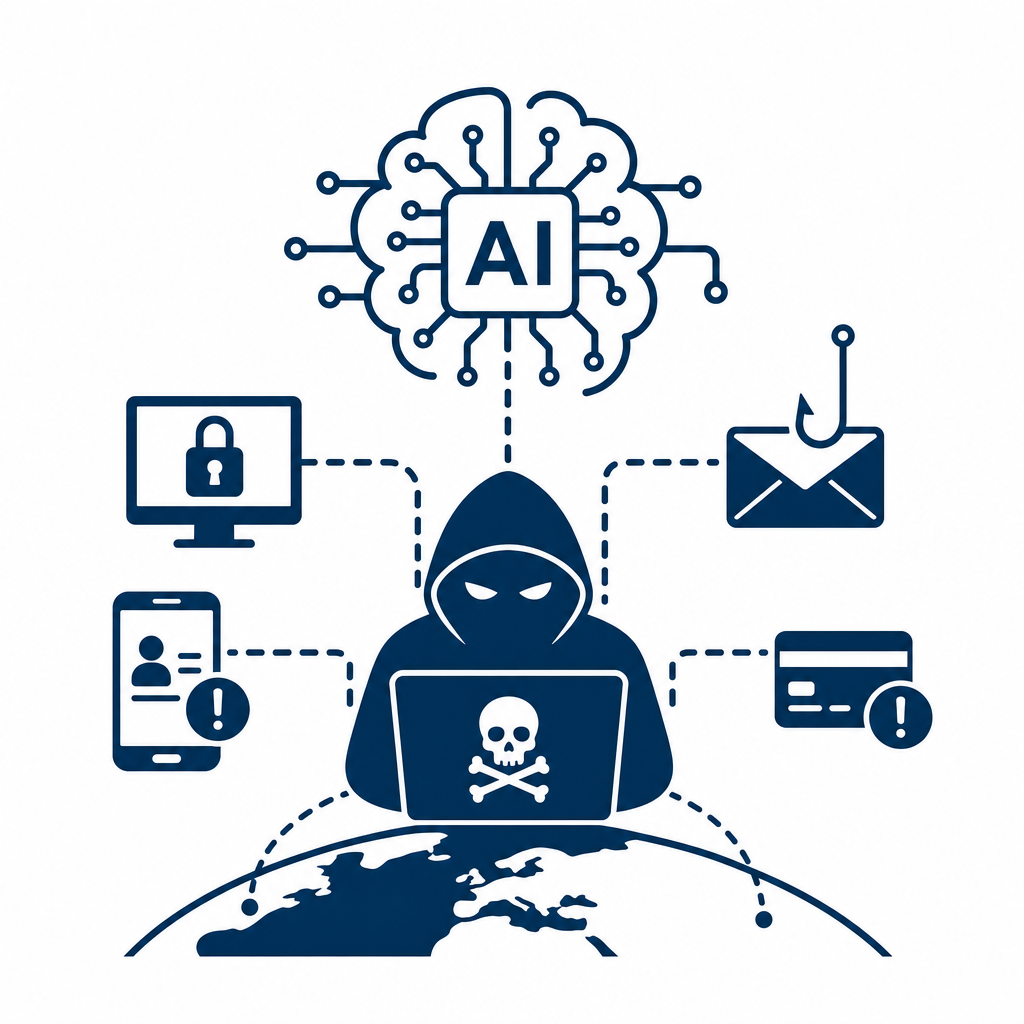
The rise of artificial intelligence has transformed numerous fields, but it has also given birth to a new breed of cybercriminals harnessing AI for malicious purposes. This article delves into the sophisticated landscape of AI-powered cybercrime, examining its implications and providing strategies for businesses to combat these emerging threats effectively.
Understanding AI in Cybercrime
As AI technology continues to evolve, its application in cybercrime has become more sophisticated and pervasive. Cybercriminals harness the power of advanced algorithms to automate complex hacking processes, enabling them to execute attacks with unprecedented speed and efficiency. These algorithms are particularly effective in enhancing phishing schemes, wherein AI can analyze vast datasets to identify potential victims based on behavioral patterns, preferences, and vulnerabilities.
For instance, AI-driven tools can generate convincing counterfeit emails tailored to the recipient’s interests, making them more likely to engage and share sensitive information. This automation extends to data breaches, where AI systems can sift through colossal amounts of stolen data to find valuable information, such as healthcare records or credit card details, which can then be exploited or sold on dark web marketplaces.
Historically, AI was viewed as a transformative tool for cybersecurity, designed to bolster defenses against digital threats. However, as with many technologies, it has been repurposed for malicious intent. High-profile incidents, such as the use of AI in the Emotet malware campaign, illustrate how cybercriminals are now employing AI not just to execute attacks, but to innovate new ones, shifting the paradigm of cybersecurity challenges faced by businesses today.
The Mechanics of AI-Enhanced Hacking
As cybercriminals increasingly leverage sophisticated AI technologies, the mechanics of hacking have transformed significantly. AI-enhanced hacking techniques are built on algorithms that can analyze vast amounts of data to predict system vulnerabilities. By employing machine learning models, attackers can not only identify but also exploit security flaws more efficiently than traditional methods.
One of the key advancements in AI hacking is the automation of penetration testing. Autonomous agents can perform repeated testing at scale, simulating various attack vectors to uncover weaknesses. For example, AI-powered brute force attacks utilize advanced algorithms to generate and test password combinations far faster than human hackers, dramatically increasing the probability of success. Additionally, AI can streamline exploit development, where machine learning systems analyze existing vulnerabilities and suggest novel exploits, further complicating defenses.
Moreover, autonomous bots continuously scan networks in real-time, ensuring that newly identified weaknesses are immediately actionable. This relentless monitoring expands the threat landscape, giving malicious actors a persistent edge as they adapt and overcome traditional cybersecurity measures. The convergence of AI with hacking techniques poses an unprecedented challenge, requiring businesses to rethink their defensive strategies to stay ahead in this evolving digital battlefield.
Social Engineering Revolutionized
As AI technology advances, it significantly enhances social engineering tactics, shifting the paradigm of digital deception. By employing machine learning algorithms, cybercriminals can now craft highly personalized phishing emails that target individuals based on their online behavior, preferences, and social connections. This customization makes these emails far more convincing than traditional, mass-produced scams, leading to higher success rates in eliciting sensitive information.
Moreover, deepfake technology has emerged as a formidable tool in this evolving landscape. Cybercriminals can create eerily realistic audio and video impersonations of trusted individuals, effectively bypassing traditional authentication measures. Imagine receiving a call from what seems to be your CEO requesting urgent details about a project; the risk of falling prey to such deceit is alarmingly high.
AI algorithms analyze vast datasets to understand human behavior and identify vulnerabilities, allowing for the development of scams that resonate on a personal level. As these sophisticated techniques become more prevalent, conventional defenses—such as basic email filters and employee training—are rendered less effective. Businesses must adapt and integrate AI-driven cybersecurity measures to counter these advanced social engineering attacks, ensuring a comprehensive defense against the increasingly deceptive tactics employed by malicious agents.
Data Breaches and Their Implications
As organizations continue to digitize their operations, the intersection of AI and data breaches is becoming alarmingly intimate. AI technologies are increasingly employed by cybercriminals to identify vulnerabilities in systems and automate the extraction of sensitive information. For instance, machine learning algorithms can process vast amounts of data to pinpoint weak spots in networks, making previously labor-intensive breach tactics faster and more efficient.
Statistics indicate a stark rise in data breaches linked to AI advancements. According to a recent study, over 60% of companies have reported data breaches in the last year, with AI facilitation cited in 30% of these incidents. The ramifications of such breaches are severe; businesses can face financial losses averaging $4 million per incident, alongside diminishing customer trust and potential legal repercussions.
Case studies highlight these grave outcomes. A major healthcare provider was targeted using AI-driven methods, leading to unauthorized access to personal health records and a resultant $5 million fine for non-compliance with data protection regulations. The reputational damage was profound, leading to a loss of clientele and a tarnished public image. Therefore, as AI technologies continue to empower malicious actors, the consequences of data breaches grow increasingly dire, underscoring the urgent need for robust cybersecurity measures.
Building Resilient Defenses
As businesses navigate the treacherous waters of AI-powered cybercrime, building resilient defenses is paramount. Implementing **AI-based cybersecurity solutions** can enhance threat detection and response times, leveraging machine learning to analyze patterns and anomalous behavior that may indicate a breach. This proactive approach can significantly mitigate risks associated with **autonomous agents** that smartly target vulnerabilities.
Regular training for employees on **cyber awareness** is crucial. As human error remains a prime factor in security breaches, educating staff on recognizing phishing attempts and social engineering tactics can empower them to act as the first line of defense. Interactive training sessions and simulations can help reinforce this knowledge, creating a culture of vigilance.
Moreover, businesses should establish comprehensive **incident response plans** that clearly outline steps to be taken in the event of a cyber incident. These plans should be regularly reviewed and updated to align with evolving threats. Continuous assessment and adaptation of security measures are critical, as new vulnerabilities surface in tandem with advancements in **AI hacking** techniques.
In this dynamic landscape, a robust cybersecurity strategy must remain flexible and forward-thinking to effectively fend off rising **digital threats**.
Future Trends and the Cybersecurity Landscape
As we look to the future of AI and cybersecurity, the interplay between innovation and risk becomes increasingly complex. Autonomous agents will likely assume a more prominent role in cybercrime techniques, deploying machine learning to launch sophisticated attacks rapidly and at scale. This necessitates developing counter-AI technologies capable of detecting and neutralizing threats in real-time. For businesses, this change highlights the need for hiring cybersecurity professionals skilled in AI, machine learning, and data analytics—an evolution from traditional methods to more dynamic, analytical defense strategies.
Furthermore, the escalating cyber threats demand a robust legal framework and international cooperation. Upcoming legislation may focus on liability for AI-driven attacks, establishing clear responsibilities for tech developers and users. Collaborative efforts between nations could lead to the establishment of norms and protocols to track and mitigate AI-based cybercrime, countering malicious uses of technology.
The landscape of cybersecurity is poised for significant transformation as we navigate these trends. Businesses must not only adapt to emerging threats but also embrace the potential of AI to fortify their defenses while remaining vigilant against its misuse.
Conclusions
In an era where AI drives innovation, it simultaneously fuels cybercrime. Businesses must remain vigilant and proactive, implementing sophisticated security measures to counter AI-driven attacks. By understanding the extent of these threats and establishing robust defenses, organizations can safeguard their data and integrity against the relentless tide of autonomous cybercrime.