The Rise of Personal AI Agents Redefining Human-Computer Interaction and the Future of Productivity
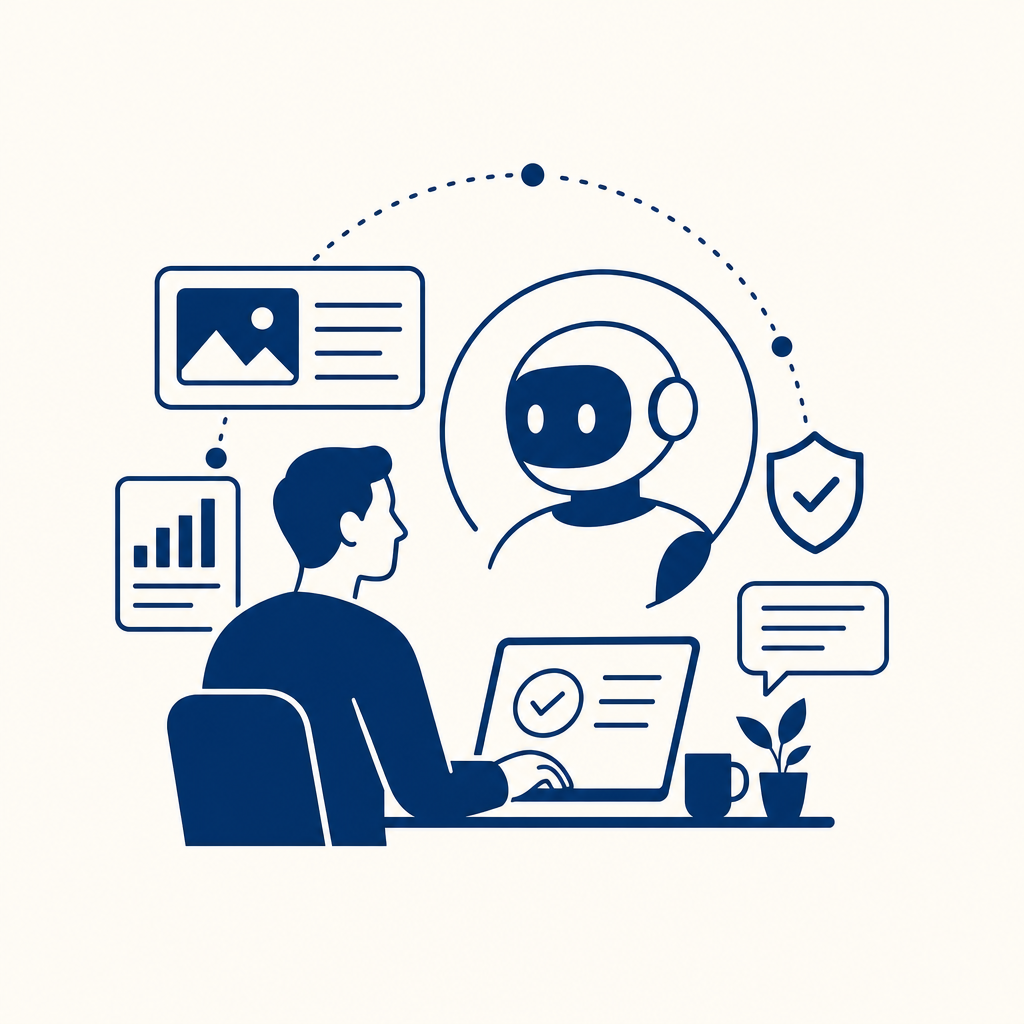
The emergence of personal AI agents is revolutionizing human-computer interaction, offering unprecedented levels of productivity and creativity. With advancements in visual AI interfaces and specialized hardware, these intelligent companions are poised to redefine our daily lives. This article delves deeper into the multifaceted dimensions of personal AI and its implications for the future of work.
Understanding Personal AI Agents
Personal AI agents have emerged as vital companions in our increasingly digital lives, redefining how we interact with technology. These AI-driven tools, such as Meta’s Muse and Tab, function as intelligent assistants that help users streamline various daily activities. From organizing schedules to providing tailored recommendations, their application spans personal and professional contexts, enhancing productivity and creativity.
The functionality of personal AI agents includes natural language processing capabilities, allowing for seamless conversation with users. For instance, Meta’s Muse assists in managing creative projects by analyzing user input and suggesting ideas, while Tab keeps track of deadlines and reminders, optimizing time management. Furthermore, these agents leverage data analytics to deliver real-time insights tailored to individual preferences, ensuring a personalized experience.
By integrating into our workflows, personal AI agents help reduce cognitive load, freeing users to focus on higher-order tasks that require creativity and problem-solving skills. As more people adopt these intelligent systems, the landscape of human-computer interaction continues to evolve, highlighting a future where work and creativity can flourish aided by these empowering digital companions.
Technological Advancements Behind Personal AI
The technological advancements propelling personal AI agents are characterized by innovations in multimodal interaction and specialized hardware. Multimodal AI, designed to engage users through voice, text, and visual inputs, enriches the user experience by accommodating diverse communication preferences. This capability allows personal AI agents to interpret context more effectively and provide relevant responses that enhance productivity. For instance, while organizing a schedule, users might verbally input tasks, receive textual confirmations, and visually track calendar changes, creating a seamless interaction blend.
Moreover, the emergence of dedicated AI hardware optimized for these agents is crucial. Devices tailored to support advanced processing and graphics enhance the capabilities of visual AI interfaces, allowing for smoother performance and immediate responsiveness. This hardware revolution enables complex real-time analyses, making interactions feel truly organic.
Visual AI interfaces are transforming user engagement by making digital communication more immersive. Users can interact with AI companions through rich graphical representations, live updates, and interactive feedback resembling natural conversations. As a result, the experience evolves from mere functional exchanges into engaging interactions, increasing user satisfaction and fostering an environment conducive to creativity and productivity.
Redefining Human-Computer Interaction
As personal AI agents evolve, they are fundamentally transforming the landscape of human-computer interaction. Unlike traditional interfaces that relied heavily on clicking or typing, these intelligent companions advocate for a more intuitive and conversational interaction style. Users engage with AI through natural language, gestures, and even emotional cues, fostering a genuine dialogue that feels more like conversing with a human than operating a machine.
This shift has profound implications for user engagement. By allowing users to express their needs in everyday language, personal AI enhances accessibility and reduces the learning curve associated with new technologies. Compared to static interfaces, these dynamic interactions lead to higher user satisfaction as people feel understood and valued. Advanced visual AI interfaces also enable rich, context-driven experiences, allowing users to visualize data and tasks in more meaningful ways.
In this environment, user autonomy is crucial; personalized experiences enabled by AI lead to more tailored interactions that resonate with individual preferences and workflows. As these AI agents become more sophisticated, they provide a seamless bridge between human intuition and machine efficiency, redefining the standards of interaction in our digital lives.
AI in Productivity and Creativity
As personal AI agents become integral to both personal and professional environments, their role in enhancing productivity and fostering creativity has garnered significant attention. These intelligent companions extend beyond simple task automation, offering tailored support that augments human capabilities. For instance, in creative industries, AI tools such as Meta’s Muse have proven invaluable. Designers can swiftly generate concept sketches or explore color palettes, allowing them to focus on higher-level ideation without the tedium of manual iterations.
In office environments, AI agents can systematically manage schedules, prioritize tasks, and even analyze data trends, enabling professionals to allocate their energy to strategic decision-making rather than mundane activities. Take the case of a marketing team using a dedicated AI assistant to analyze campaign metrics. By efficiently synthesizing data, the AI empowers the team to derive insights faster, leading to more agile campaign adjustments.
These applications illustrate that personal AI agents are not replacing human roles but enhancing them. They contribute to a collaborative synergy whereby technology acts as an enabler, fostering an environment where creativity and productivity thrive. As the capabilities of these agents evolve, their influence on our workflows and creative processes will only deepen, emphasizing the transitional nature of our future work landscapes.
Privacy and Ethical Considerations
As personal AI agents become increasingly integrated into everyday tasks, the delicate balance between utility and privacy is under scrutiny. With enhanced capabilities to personalize user experiences, these agents often require extensive data collection, raising concerns about how much personal information users must relinquish. Users must grapple with the implications of sharing sensitive data with AI, such as personal habits, preferences, and even more profound insights into their daily routines.
Moreover, the ethical responsibilities of developers cannot be overlooked. As they innovate and deploy these AI systems, ensuring robust privacy preservation and data security is paramount. Issues like data breaches, misuse of personal information, and algorithmic bias complicate this landscape, prompting a dialogue about accountability. Users rightfully expect transparency regarding how their data is collected, used, and stored.
The perception of personal AI agents varies widely, with some users embracing their potential for improving efficiency while others express skepticism and concern over invasiveness. Trust is a critical component, and as these technologies evolve, ongoing conversations about ethical usage and user rights will be essential in shaping a future where personal AI can coexist harmoniously with individual privacy.
The Future of Work with Personal AI
As personal AI agents become ingrained in our daily workflows, the future of work will likely be characterized by enhanced collaboration between humans and these intelligent systems. The integration of personal AI promises to redefine productivity across various industries, from creative fields to corporate environments. Rather than replacing human roles, these AI companions are expected to augment human capabilities, streamlining mundane tasks and allowing professionals to focus on more complex challenges.
Automation trends suggest that repetitive and routine jobs may see significant transformations as AI takes over. However, new roles will emerge, particularly in areas that require human judgment, creativity, and emotional intelligence—qualities that AI cannot fully replicate. For instance, jobs in project management may evolve, leveraging AI for scheduling and data analysis while professionals remain responsible for strategic decision-making and interpersonal collaboration.
Nonetheless, the embrace of personal AI is not without obstacles. Organizations must navigate potential resistance from employees wary of AI integration, often stemming from fears of job displacement. Additionally, ensuring that these intelligent agents are user-friendly and reliable will be crucial for widespread adoption. Harnessing the power of personal AI may unlock transformative opportunities, but this must be balanced with a commitment to ethical practices and human-centric design.
Conclusions
In conclusion, personal AI agents are reshaping our interactions with technology and enhancing productivity in profound ways. As we embrace these advancements, it is crucial to navigate the accompanying challenges of privacy and ethics. Understanding these dynamics will ensure that we harness the potential of AI responsibly and effectively for a better future.